
Guide to Equipping Indoor Recreation Spaces with Play Equipment
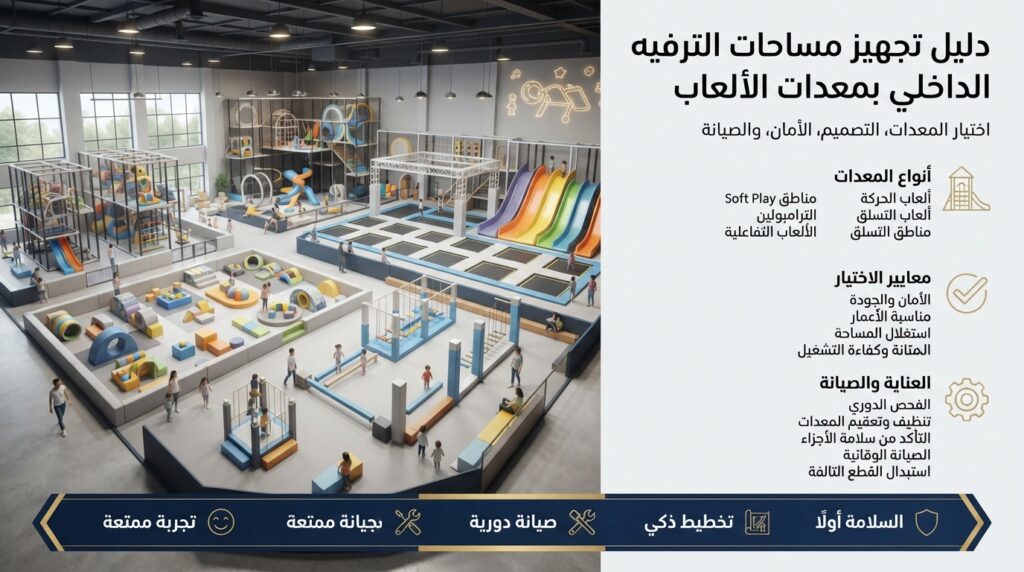
Guide to Equipping Indoor Recreation Spaces with Play Equipment Creating a successful indoor recreation space involves more than simply choosing attractive games. It requires careful space planning, selecting equipment that can withstand daily use, and providing a safe and comfortable environment for different age groups. Whether you are setting up an entertainment center, social club, hotel, or multipurpose hall, choosing the right equipment from the beginning can improve the visitor experience while reducing future maintenance costs and downtime. 1. Heavy Use Requires Commercial-Grade Quality Recreation equipment in entertainment centers and clubs is exposed to frequent use by large numbers of visitors, so its requirements differ from those of residential equipment. When choosing table tennis tables, billiards tables, or foosball tables, look for: Commercial-grade equipment may have a higher initial cost, but it is generally more suitable for facilities that operate daily and need to minimize breakdowns and downtime. 2. Choose Equipment Based on Age Group and Available Space There is no single set of games suitable for every facility. Before purchasing, consider the users’ ages, the type of activity, and the available space. Table Tennis and Foosball These are suitable options for a wide range of age groups and can be used in clubs, entertainment centers, hotels, and social spaces. However, sufficient clearance should be provided around each table so players can move freely without colliding with tables, walls, or other users. Billiards and Snooker Billiards and snooker tables require more space than some other table games because of cue length and the movement required around the table. Special attention should also be given to lighting above the playing surface to provide balanced illumination without creating distracting glare for players. Multi-Game Tables Multi-game tables can be a practical option for smaller spaces that want to offer several activities without dedicating a separate area to each game. Before purchasing, check the quality of the conversion mechanisms and how easily users can switch between different games. Darts A darts area requires clear planning of the playing lane and a safe zone behind and around the dartboard. In family-oriented spaces, electronic darts or systems designed specifically for recreational use may be considered, with safety as a primary selection criterion. 3. Safety in Open-Access Recreation Spaces Unlike specialized sports facilities, recreation centers often accommodate users of different ages and skill levels at the same time. Therefore, attention should be paid to details that can affect safety, including: In family-oriented spaces, equipment should be selected according to the target age group and the manufacturer’s usage instructions for each product. 4. Ease of Maintenance and Cleaning Recreation equipment is frequently touched and used, so it should be easy to clean and maintain. When selecting equipment, ask about: For example, certain billiards table components can be replaced when worn, while other tables and equipment may require periodic inspection of hinges, rods, or moving mechanisms. The easier the equipment is to maintain, the shorter its downtime is likely to be. 5. Plan the Equipment Layout Before Purchasing One of the most common mistakes is purchasing equipment first and then trying to find a suitable place for it. A better approach is to prepare a layout of the space before purchasing. The plan should show: This planning helps prevent overcrowding and creates a more comfortable visitor experience. 6. Think About Future Flexibility A facility’s needs may change over time, so it is useful to choose equipment that allows the space to be rearranged. Foldable or movable tables provide greater flexibility, particularly in social clubs and multipurpose halls that host different events and activities. Part of the space can also be reserved for mobile games that can be relocated depending on visitor numbers or the type of activity. 7. Don’t Overlook Storage Storage is an important part of designing a recreation space, especially when the facility includes foldable equipment or multiple accessories. A suitable storage area should be provided for: Storage should ideally be dry, organized, and easily accessible without interfering with visitor movement. Quick Summary Frequently Asked Questions How many tables are suitable for a small entertainment center? There is no fixed number that applies to every center. The appropriate number depends on the available space, expected visitor volume, and the proportion of the facility allocated to games versus seating and service areas. It is best to prepare a space layout and estimate the expected number of users during peak periods before determining the final number of tables. Are electronic darts better than traditional darts for family spaces? Electronic darts can be a suitable option for family-oriented and recreational spaces, particularly when reducing the risks associated with sharp dart points is a priority. However, the equipment should be selected according to the target age group and usage instructions, with a safe playing area provided. Can billiards, table tennis, and foosball be combined in the same space? Yes. Combining these games can be highly suitable for entertainment centers and social clubs, provided that the equipment is laid out properly and sufficient clearance is maintained around each game. Do you provide regular maintenance for indoor game equipment? Yes. Al Etihad Sports Fitness provides maintenance and technical support services for indoor game equipment, with spare parts available according to the type of equipment used. Equip Your Recreation Space Professionally Al Etihad Sports Fitness provides integrated equipment solutions for entertainment centers, multipurpose halls, and social clubs, including indoor game equipment, supply and installation services, maintenance, and technical support. Contact our sales team to request a customized quotation.
Team Sports Equipment: Types, Benefits, and Preventive Maintenance — A Comprehensive Guide
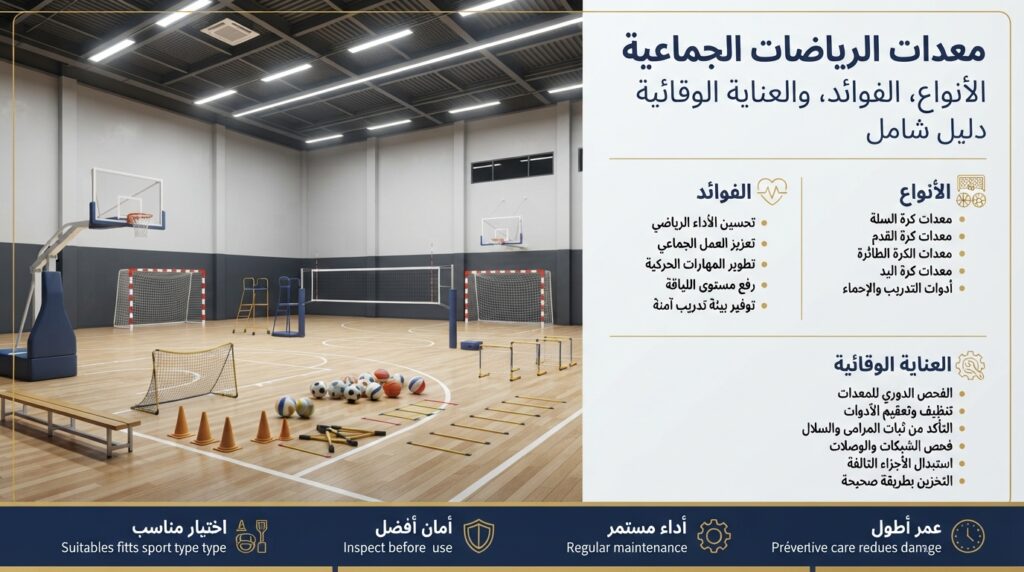
Team Sports Equipment: Types, Benefits, and Preventive Maintenance — A Comprehensive Guide Team sports require equipment designed to withstand frequent use, training sessions, and competitions, with requirements varying from one sport to another. Therefore, choosing the right equipment involves more than simply evaluating material quality. It also includes safety, appropriate sizing, intended level of use, and ease of maintenance. Overview of Team Sports Equipment Equipment varies according to the nature of each sport. Key categories include: Football Essential equipment includes: Goals and nets should be selected according to the size of the playing field, age group, and level of use, while ensuring that the goal is stable during play. Volleyball Essential equipment includes: Net posts require secure anchoring, and the net height should be adjusted according to the age group and competition level. Basketball Key equipment includes: Particular attention should be given to the stability of the structure, backboard, and rim, especially in facilities that experience intensive use. Handball Essential equipment includes: The stability of the goal and condition of the net should be checked before use. Hockey Hockey equipment varies depending on the type of game and facility, but may include: Protective equipment requires regular inspection due to the physical contact and collisions involved in the sport. Benefits and Key Muscles Targeted Team sports combine physical activity, motor skills, and social interaction. The muscles and physical abilities emphasized vary according to the nature of each sport. Football Football involves repeated running, changes of direction, acceleration, and stopping. As a result, the quadriceps, hamstrings, calves, and core muscles are continuously engaged. Regular training also helps improve cardiovascular fitness, speed, and agility. Volleyball Volleyball requires jumping, landing, and rapid movement, engaging the quadriceps, glutes, and calf muscles. Serving, hitting, and passing also rely on the shoulders, arms, and core muscles. Basketball Basketball combines running, jumping, stopping, and changing direction, placing significant demands on the lower-body muscles. The shoulders, arms, and core are also engaged during passing, shooting, and ball control. Handball Handball combines running, jumping, throwing, and changes of direction, engaging the legs, core, shoulders, and arms. It also requires a high level of coordination between the upper and lower body during throwing and movement. Hockey Hockey requires continuous stick control while moving, engaging the forearms, shoulders, and core, along with the leg muscles used for movement and changes of direction. Overall, team sports help develop cardiovascular fitness, strength, speed, agility, coordination, and teamwork. Quick Tips Before Buying Team Sports Equipment Before purchasing equipment, make sure to: For complete details, see How to Equip Your Sports Team with the Right Equipment. Preventive Maintenance for Team Sports Equipment Regular maintenance helps reduce equipment failures and identify problems before they affect player safety. Inspecting Football and Handball Goals Goals and anchoring points should be inspected regularly to ensure stability and confirm that there is no structural damage. Nets should also be checked for tears or loose sections and properly secured before use. No goal should be used if it is unstable or has not been properly secured. Basketball System Maintenance Regularly inspect the structure, backboard, rim, and mounting points, particularly for systems exposed to vibration or frequent use. Pay attention to unusual movement, noises, or looseness at mounting points, and stop using the equipment if a problem requiring inspection is identified. Inspecting Volleyball Nets and Posts Inspect net posts, anchoring systems, ropes, and tensioning mechanisms before use and on a regular basis. Make sure the net height and tension are correctly adjusted for the activity. Inspecting Hockey Sticks and Balls Inspect sticks for cracks, breaks, or damaged edges, and replace any stick that is no longer safe to use. Balls or pucks should also be inspected to ensure there is no damage that could affect gameplay. Inspecting Protective Equipment Shin guards, gloves, helmets, and other protective equipment should be inspected regularly. Any item showing signs of damage or that has lost its ability to provide the required level of protection should be replaced according to the manufacturer’s instructions. Storing Sports Equipment Proper storage is an essential part of maintenance, especially in clubs and schools where equipment is used frequently. It is recommended to: When Should Equipment Be Replaced? Do not wait for equipment to fail during a match before deciding to replace it. Signs that require inspection or replacement include: For equipment used in competitions, it is also important to ensure that it continues to comply with the required specifications and regulations. Conclusion Choosing team sports equipment should begin by identifying the sport, age group, and intended level of use, followed by selecting equipment that matches the requirements of training or competition. Goals, basketball systems, net posts, balls, sticks, and protective equipment are among the items that require regular inspection, as their condition directly affects player safety and training quality. Proper storage and preventive maintenance also help extend equipment life, reduce breakdowns, and lower replacement costs. Al Etihad Sports Fitness provides comprehensive solutions for equipping clubs, schools, and sports facilities with team sports equipment, along with supply, installation, maintenance, and technical support services. Contact our sales team to request a customized quotation.
How to Equip Your Sports Team with the Right Equipment
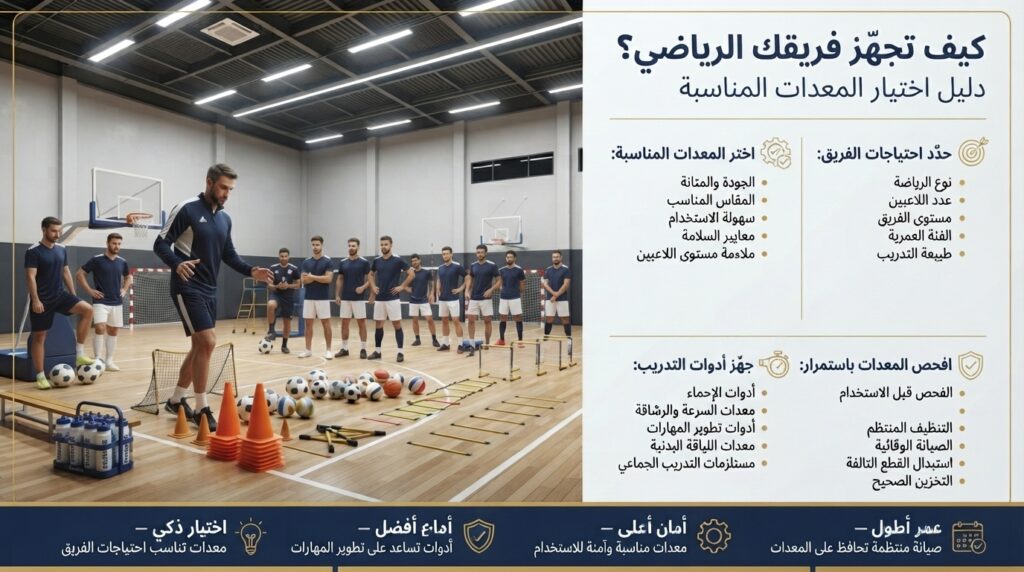
How to Equip Your Sports Team with the Right Equipment Equipping a sports team involves more than simply purchasing balls and basic equipment. It begins with understanding the requirements of each sport, distinguishing between daily training equipment and official competition equipment, and selecting equipment that matches the players’ skill level and the nature of the facility. Whether you are equipping a sports club, school, or academy, proper planning helps you get the right equipment without spending your budget on unnecessary items. 1. Equipping a Football Team Football teams need a range of essential equipment for training sessions and matches, including: For daily training, training balls designed for intensive use can be selected. Official matches, however, require balls that meet the required specifications for size, weight, and bounce. The stability of the goals should also be checked, and they should be properly secured before use. 2. Equipping a Volleyball Team Volleyball relies heavily on proper court setup. Key equipment includes: The net height should be adjusted according to the age group, gender, and competition level, while ensuring that the posts are stable and the net is properly tensioned. Court boundaries should also be clear and visible from different areas of the court. 3. Equipping a Basketball Team The basketball system is one of the most important elements of the setup and typically includes the structure, backboard, rim, and net. Particular attention should be paid to: For daily training, basic equipment may be sufficient, with an emphasis on quality and durability rather than purchasing every piece of official competition equipment. 4. Equipping a Handball Team Handball teams require equipment suited to the fast pace of the game and frequent physical contact. Key equipment includes: The goal and net should be inspected and their stability confirmed before training sessions and matches. The appropriate ball size should also be selected according to the players’ age group and competition level. 5. Equipping a Hockey Team The equipment required varies depending on the type of hockey, but a basic setup may include: Safety should be a top priority. Appropriate protective equipment should be provided according to the players’ age group and skill level. Sticks and protective equipment should also be inspected regularly, and any damaged item that could affect player safety should be replaced. 6. Distinguish Between Training and Competition Equipment One of the most important decisions to make before purchasing is determining the intended level of use. Daily Training Equipment The focus should be on: Official Competition Equipment Official competition equipment requires careful attention to the specifications and certifications required by the relevant tournament or sports federation, in addition to manufacturing quality and durability. Therefore, the same purchasing criteria should not necessarily be applied to all equipment. Some training equipment may be sufficient for an academy, while a facility that hosts official matches may require equipment that meets more specific standards. 7. Plan the Budget According to Priorities It is not necessary to purchase everything during the first phase. The budget can be divided into three stages: This approach helps clubs and schools establish the essential setup first and then gradually develop the facility according to the budget and team requirements. 8. Sports Kits and Team Identity In addition to sports equipment, team uniforms are an important part of a club or academy’s visual identity. Uniforms can be customized based on: It is preferable to determine the required number of kits in advance and keep additional pieces available in the most commonly used sizes. 9. Maintenance Is Part of the Equipment Budget The purchasing process does not end once the equipment has been delivered and installed. A regular maintenance plan should include: A maintenance log should also be kept, particularly in clubs and schools where equipment is used every day. Quick Takeaways Frequently Asked Questions Can Custom Team Kits Be Ordered with the Club’s Colors and Logo? Yes. Custom team kits can be designed according to the club’s visual identity, including colors, logo, player names, and numbers, based on the required design and quantities. What Is the Difference Between Training Balls and Official Match Balls? Official match balls must meet specific requirements that vary according to the sport and relevant federation, such as size, weight, bounce, and materials. Training balls, on the other hand, place greater emphasis on durability, daily-use performance, and budget suitability. Can More Than One Team Sport Be Equipped as Part of the Same Project? Yes. A unified equipment plan can be prepared for clubs and schools that offer multiple sports, with the budget and equipment divided according to the requirements of each court or facility. How Do I Determine What Equipment My Team Needs? Start by identifying the sport, number of players, age group, number of weekly training sessions, and whether the facility is intended solely for training or will also host official competitions. A suitable equipment list and budget can then be developed based on actual usage requirements. Equip Your Team with the Right Equipment Al Etihad Sports Fitness provides comprehensive solutions for equipping clubs, schools, and academies with team sports equipment, from essential equipment and training supplies to competition-grade setups, along with supply, installation, maintenance, and technical support services. Customized solutions are also available for designing and supplying sports team kits that match the club’s identity and team requirements. Contact our sales team to request a customized quotation.
Guide to Equipping a School Physical Education Class
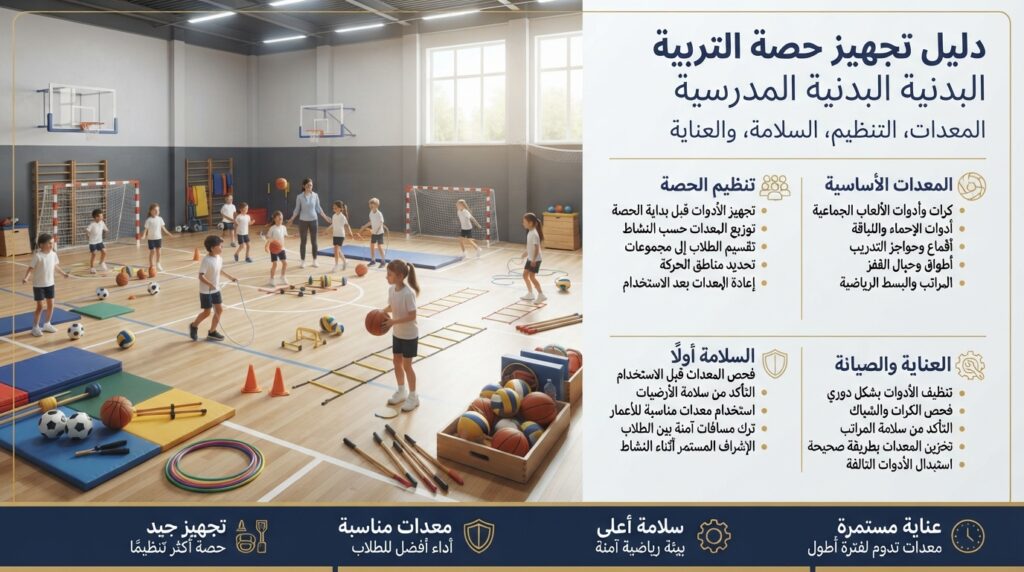
Guide to Equipping a School Physical Education Class Equipping a physical education class at school requires more than simply providing balls and hoops. Choosing the right equipment should take into account students’ ages, number of users, types of activities, ease of storage, and required safety standards. Whether the school includes kindergarten, primary, preparatory, or secondary grades, organizing equipment according to the needs of each stage helps physical education teachers deliver more structured and effective classes. 1. Choose Equipment According to the Age Group Different school stages do not require the same type of equipment. Tools suitable for a kindergarten child may not be appropriate for a secondary school student. Kindergarten and Early Primary School The priority at this stage is to develop fundamental motor skills through simple and safe activities. Suitable equipment includes: It is preferable to choose equipment with clear colors and child-friendly dimensions while avoiding heavy equipment or components that could cause injury if used incorrectly. Upper Primary and Preparatory School Students can gradually transition to equipment designed to develop speed, agility, coordination, and strength. Examples include: This equipment allows teachers to diversify classes and develop a wider range of motor skills. Secondary School At this stage, more specialized equipment can be introduced according to students’ abilities and school activities, such as: Equipment should be selected according to students’ skill levels and curriculum requirements rather than based solely on professional specifications. 2. Safety Comes Before Variety When equipping a school, safety should be one of the most important purchasing criteria, as equipment is often used by large numbers of students throughout the school day. Look for equipment that is: Students should also be trained in proper equipment use, and any equipment showing signs of damage or breakage should not be used. 3. Prepare Equipment in Ready-to-Use Sets One of the main challenges faced by physical education teachers is transporting equipment between classrooms and sports areas while preparing a class within a limited amount of time. Using dedicated bags or ready-made equipment packages containing frequently used items can help, such as: This organization helps speed up class preparation and reduces the risk of losing small items or mixing equipment intended for different school stages. 4. Store Equipment in an Organized Way Proper storage not only protects equipment but also helps prevent accidents inside the school. A designated storage area for physical education equipment is recommended, with: Labeling equipment or organizing it by school stage can also help teachers quickly find the required set. 5. Equip the School Playground If the school has an outdoor sports area, equipment should be selected to withstand daily use and weather conditions. Consider the following: If the sports area is completely exposed to the elements, it is preferable to select equipment according to local climatic conditions to reduce the rate of deterioration. 6. Do Not Overlook Team Sports Equipment Physical education classes can introduce students to a variety of sports, making it useful to provide basic equipment for team activities, such as: Not all equipment needs to meet professional competition specifications. The most important factors are that it is age-appropriate, safe, and capable of withstanding school use. 7. Gradually Add Fitness and Agility Equipment Physical education classes can be enhanced with simple equipment that helps develop fitness components without requiring large machines. Suitable options include: These tools can be used for multiple exercises, making them suitable for schools looking to maximize the value of their equipment budget. 8. Physical Measurement and Assessment Equipment As students get older, tools can be added to help teachers monitor physical performance and development. These may include: Measurement results should be used to monitor progress and encourage students rather than simply to compare them with one another. 9. Plan the Budget in Stages It is not necessary to equip the school with every type of equipment in a single year, particularly when the budget is limited. The purchasing plan can be divided into stages: Stage 1: Balls, hoops, cones, ropes, and basic movement equipment. Stage 2: Agility, balance, and team sports equipment. Stage 3: Measurement and assessment tools and specialized activity equipment. Stage 4: Development of the school sports area and addition of outdoor equipment according to the school’s needs. This approach helps direct the budget toward equipment that serves the largest number of students and classes first. 10. Maintenance and Regular Inspection Even simple equipment requires regular inspection, especially when it is used daily by large numbers of students. Inspect: Any equipment showing a problem that could affect student safety should be removed from service until it is repaired or replaced. Quick Takeaways Frequently Asked Questions Can a School Be Equipped in Stages Instead of Purchasing Everything at Once? Yes. This is a practical option for schools working with an annual budget. The school can begin with essential equipment that serves the largest number of classes, then gradually add agility equipment, team sports equipment, and measurement tools. What Is the Difference Between Kindergarten Equipment and Middle School Equipment? Kindergarten equipment is generally lighter, easier to handle, and more suitable for developing fundamental motor skills. Middle school students can use more varied and specialized equipment to develop speed, agility, coordination, and sports-specific skills. Can Different Equipment Packages Be Prepared for Each School Stage? Yes. Separate packages can be prepared for kindergarten, primary, preparatory, and secondary schools, with each package containing the equipment most suitable for the activities and target age group. Does School Physical Education Equipment Require Regular Maintenance? Yes. Intensive daily use makes regular inspection essential for identifying cracks, damage, or anchoring problems before they affect student safety. Equip Your Physical Education Classes More Effectively Al Etihad Sports Fitness provides comprehensive solutions for equipping schools with physical education and sports activity equipment, with the option to prepare packages suitable for each educational stage and budget, along with supply, installation, and technical support services. Contact our sales team to request a customized quotation.
School Sports Activities: Types, Benefits, and Preventive Maintenance — A Comprehensive Guide
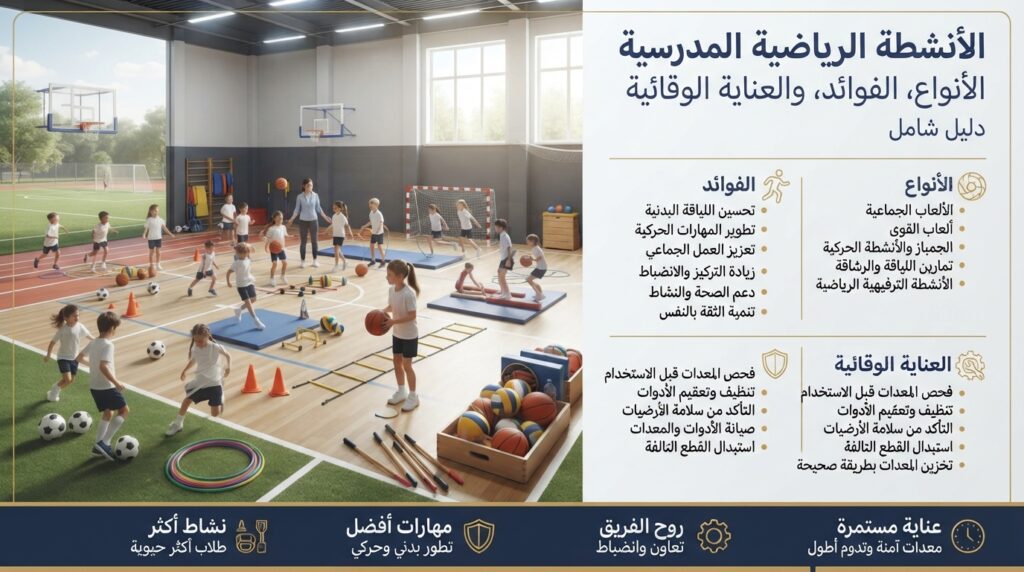
School Sports Activities: Types, Benefits, and Preventive Maintenance — A Comprehensive Guide School sports activities are an essential part of students’ growth and development, helping them build their motor, physical, and social skills. Equipping a school goes beyond simply providing traditional sports equipment. Equipment should be selected according to students’ age groups, number of students, types of activities, and required safety standards. Overview of School Sports Activity Equipment The equipment used in schools varies depending on students’ ages and the type of activity. Key categories include: Mini Team Sports Equipment This includes: These tools are particularly useful in kindergartens and early primary grades to teach fundamental skills in a safe and interactive way. Movement and Motor Coordination Equipment This includes: These tools allow teachers to design a variety of exercises to develop movement, agility, balance, and coordination. Physical Measurement and Assessment Tools These can be used with older students to monitor the development of different fitness components, such as: These tools are best used to monitor students’ progress and encourage gradual improvement. School Playground Equipment This includes fixed and movable equipment used in school yards and outdoor sports areas. Such equipment should be designed to withstand frequent use by large numbers of students. Special attention should be given to structural stability and the safety of movement areas surrounding the equipment. Benefits and Key Skills Developed School activity equipment differs from professional sports training equipment. Its primary purpose is to support students’ physical and motor development and encourage them to stay active. Mini Team Sports Balls, hoops, and small goals help develop fundamental motor skills, including: Team activities also provide an opportunity to teach students participation, cooperation, and respect for rules. Movement and Coordination Equipment Hurdles, agility ladders, and balance equipment help develop: These skills provide an important foundation for learning many sports during later school years. Physical Measurement and Assessment Tools Measurement tools help older students understand their physical abilities and track their progress over time. Teachers can use them to assess factors such as speed, agility, and endurance, according to curriculum objectives and the students’ age group. Playground Equipment Playground equipment provides opportunities for regular physical activity and helps develop movement, social interaction, and self-confidence when used in a safe and well-organized school environment. Overall, school sports activities encourage daily movement, develop motor skills, promote cooperation and discipline, and help establish healthy physical activity habits from an early age. Quick Tips Before Purchasing Before purchasing school sports activity equipment, make sure to: For complete details, see The Guide to Equipping a School Physical Education Class. Preventive Maintenance for School Sports Activity Equipment Frequent use by large numbers of students makes inspection and maintenance an essential part of equipment management. Inspect Equipment Before Each Class Equipment used during each class should be inspected, especially: Any cracked, broken, or unstable equipment should be removed from use until it is repaired or replaced. Cleaning Movement and Coordination Equipment Equipment used in outdoor areas may be continuously exposed to dust and moisture. Therefore, it is recommended to: Organized Storage Proper storage helps reduce the loss of small equipment and extend its service life. Use dedicated bags, boxes, or carts to organize equipment according to activity type. Heavy equipment should be stored in stable and easily accessible locations. Equipment should also be kept away from areas with excessive humidity or prolonged direct sunlight unless it is specifically designed for such conditions. Inspecting School Playground Equipment Outdoor playground equipment requires regular inspection due to intensive use and exposure to weather conditions. Check the following: Any equipment showing a problem that could put students at risk should be taken out of service until it has been inspected and repaired. When Should Equipment Be Replaced? Do not rely solely on the equipment’s external appearance when assessing its condition. Equipment may need to be replaced when there are: The manufacturer’s instructions regarding the expected service life and safe use of each product should also be taken into consideration. Quick Takeaways Frequently Asked Questions Can a School Be Equipped in Stages? Yes. The equipment plan can be divided into several stages according to the annual budget. It is preferable to start with equipment that can be used across the largest number of classes and age groups, then gradually add specialized equipment. Do Kindergartens Need Different Equipment from Secondary Schools? Yes. Students’ abilities and needs vary significantly between age groups. Kindergartens require lightweight and simple equipment that helps develop fundamental skills, while older students can use more varied and specialized equipment. Can the Same Equipment Be Used for More Than One Activity? Yes. Some equipment, such as cones, hoops, agility ladders, and ropes, can be used for a wide range of exercises and activities. This makes them a good choice for schools looking to maximize the value of their equipment budget. How Often Should School Sports Equipment Be Inspected? Simple equipment should ideally be inspected before every class, with more comprehensive periodic inspections of equipment, structures, and outdoor areas. An immediate inspection should also be conducted whenever damage, an accident, or unusual use of the equipment is observed. Equip Your School Sports Activities with a Complete Solution Al Etihad Sports Fitness provides comprehensive packages of school sports activity equipment designed to suit different educational stages and school budgets, along with supply, organization, and technical support solutions. Contact our sales team to request a customized quotation.
Outdoor Playground Equipment: Types, Benefits, and Preventive Maintenance
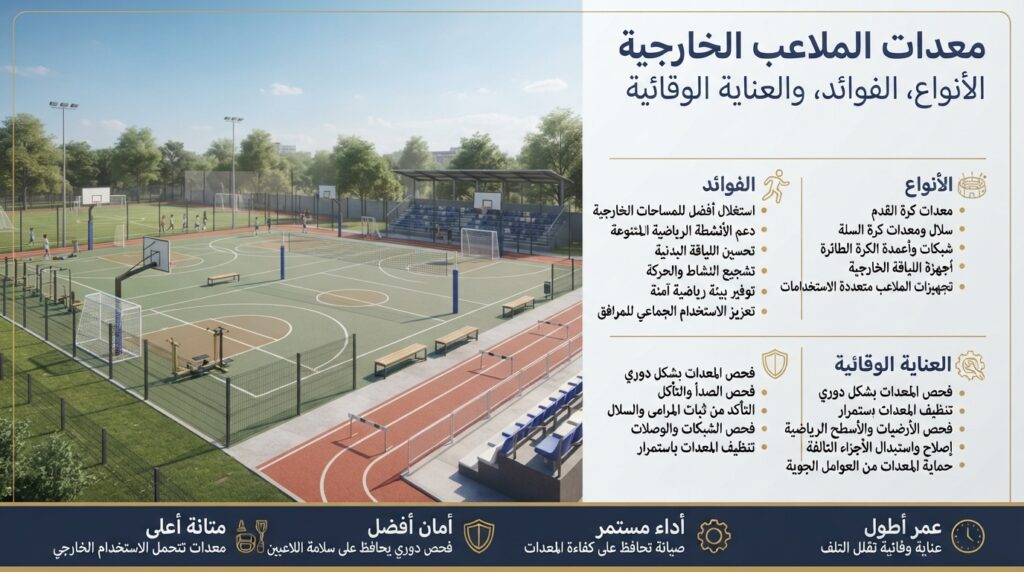
Overview of Outdoor Playground Equipment Outdoor playground and fitness equipment can be divided into two main categories, each with different uses and target users: Children’s Playground Equipment This includes: Outdoor Fitness Equipment for Adults This includes: Benefits and Key Muscles Targeted The benefits of outdoor playground equipment vary depending on the type of equipment and the age group using it: In general, outdoor playgrounds provide an environment that combines movement, recreation, and physical activity for both children and adults, with the flexibility to design the space according to the needs of its users. Quick Tips Before Purchasing Preventive Maintenance Outdoor equipment is exposed to sunlight, moisture, dust, and continuous use. Regular maintenance helps maintain safety and extend the equipment’s service life. Quick Takeaways Al Etihad Sports Fitness provides comprehensive solutions for setting up outdoor playgrounds, children’s play areas, and open-air fitness areas, with equipment designed for outdoor use and regular maintenance services to help maintain safety and performance. Contact our sales team to request a customized quotation.
How to Choose Safe Outdoor Playground Equipment for Your Facility
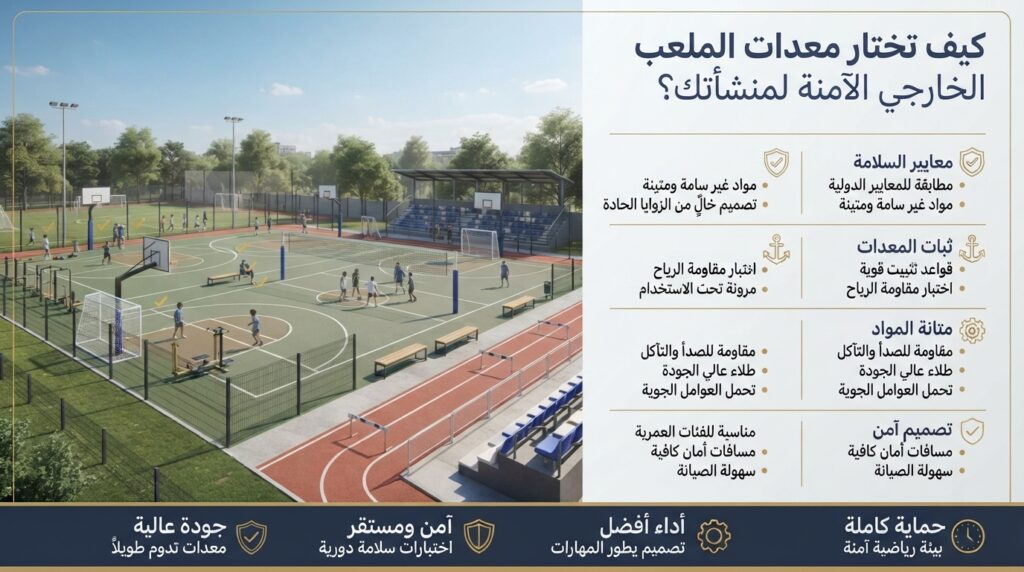
How to Choose Safe Outdoor Playground Equipment for Your Facility Outdoor playgrounds serve two completely different groups: children’s play areas and outdoor fitness training areas for adults. Each group has different requirements in terms of design, safety, materials, and maintenance. Choosing the right equipment from the beginning helps reduce the risk of injuries, extend the lifespan of the components, and maintain a high-quality user experience. 1. Children’s Playground Equipment: Start with the Age Group Slides, swings, and climbing structures vary in design, height, and difficulty depending on the child’s age. Therefore, equipment should be selected according to the target age group, taking into consideration: It is preferable to separate play areas designed for different age groups when there is a significant difference in children’s size and motor abilities. 2. Safety Surfacing Is Not Optional Safety surfacing is one of the most important elements when setting up any children’s playground, especially underneath and around: The type and thickness of the safety surfacing should be selected based on the potential fall height and the nature of the equipment, rather than simply on appearance or price. The surface should also be inspected regularly to ensure there are no tears, depressions, or areas that have lost their shock-absorbing capability. 3. Choose Materials That Can Withstand Weather Conditions Outdoor equipment is continuously exposed to sunlight, moisture, dust, and temperature fluctuations. Therefore, materials suitable for outdoor use should be selected. Look for equipment that offers: Choosing the right materials from the beginning reduces the need for frequent repairs and replacements. 4. Sand Play Areas Require Regular Care If the playground design includes a sand play area, cleanliness and maintenance should be addressed regularly. Essential maintenance includes: 5. Outdoor Fitness Equipment for Adults If the facility includes an outdoor functional training area, it should be treated as a fitness training space rather than simply as a play area. Functional Training Stations and Obstacle Courses These structures should be able to withstand frequent use and different loads while providing sufficient movement space between training stations. Planning should take into account: 6. Training Ropes and Training Frames Training ropes and training frames are practical tools for outdoor areas, but they require strong and secure anchoring. Before purchasing, make sure to check: Any rope showing signs of wear or cracking should be removed from service and replaced before further use. 7. Planning Is More Important Than Simply Buying Equipment One common mistake is purchasing the equipment first and then trying to find a suitable location for installation. Instead, the project should begin by defining: This approach results in a safer playground that is easier to manage and operate efficiently. 8. Regular Maintenance Is Part of Safety Outdoor equipment is exposed to conditions that can accelerate wear and deterioration compared with indoor equipment. Therefore, you should not wait for an obvious fault to appear before conducting an inspection. A maintenance program should include: Quick Takeaways Frequently Asked Questions How Often Should Outdoor Playground Equipment Be Inspected? A regular inspection program should be established based on usage levels and weather conditions, with additional inspections after severe conditions such as heavy rain or strong winds. Can a Children’s Play Area and a Functional Training Area Be Combined? Yes, both can be included within the same facility. However, there should be clear separation between the two areas through proper
How to Set Up a Professional Yoga and Pilates Studio ?
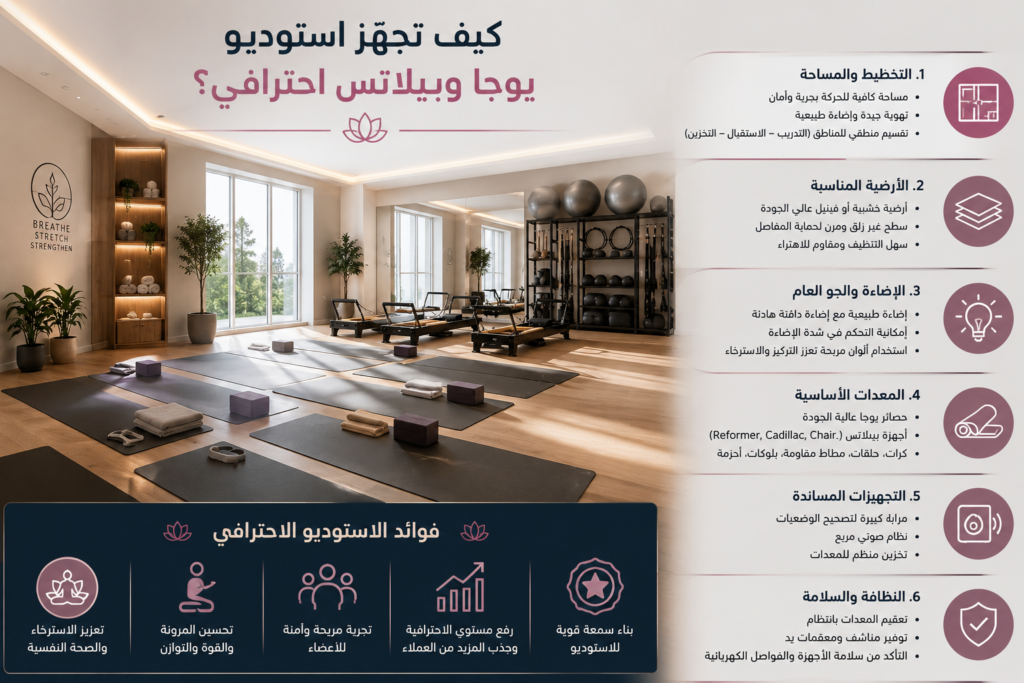
How to Set Up a Professional Yoga and Pilates Studio A yoga and Pilates studio differs from a traditional fitness gym. Comfort, calmness, cleanliness, and personal space for each participant are just as important to the overall experience as the quality of the equipment itself. Therefore, setting up a professional studio starts with selecting the right equipment, followed by planning the space, storage, and cleaning procedures according to the nature of the classes and the number of participants. 1. Yoga Equipment: Simplicity Serves Function Yoga classes do not require a large number of machines, but the quality of the essential tools can make a noticeable difference to the participant’s experience. Choose mats made from comfortable, non-slip materials, taking into consideration the appropriate thickness for the type of classes and expected level of use. Yoga Mats For studios hosting multiple classes every day, mats should be easy to clean and resistant to wear caused by frequent use. Yoga Blocks and Straps Blocks and straps help participants achieve certain poses with greater control and are therefore essential tools for studios that accommodate different skill levels. A range of additional accessories can also be provided depending on the type of classes, such as blankets, cushions, and pose-support tools. 2. Pilates Equipment: The Reformer Comes First The Pilates Reformer is one of the most important investments in a Pilates studio. Equipment quality varies depending on the frame design, spring system, movement mechanism, and ease of maintenance. If the studio will host consecutive classes throughout the day, priority should be given to equipment designed for frequent use, with a durable frame, smooth movement system, and components that can be easily maintained and replaced. Pilates Accessories Relatively low-cost accessories can be added to expand training options, such as: These accessories help diversify classes without requiring a significant increase in equipment or floor space. 3. Shared Accessories That Enhance the Studio Experience There are several tools that can be used in both yoga and Pilates classes and can improve the participant experience while keeping the studio organized. These include foam rollers, yoga wheels, resistance tools, as well as storage units for mats and accessories. Storage should ideally be located close to the training area without obstructing participant movement or reducing the available space for classes. 4. Planning Space for Group Classes Floor-based yoga and Pilates classes require sufficient space for each participant to move and extend their arms and legs without interfering with others. As a general planning guideline, you can start with approximately 1.5 × 2 meters per participant for floor-based classes, then adjust this based on the type of class, equipment size, and nature of the movements. In Reformer areas, additional space should be provided around the machines to allow instructors to move freely, monitor participants, and access the equipment easily. Before purchasing equipment, it is best to create a complete studio layout showing: 5. Cleanliness and Ease of Disinfection Because there is direct body contact with the equipment, cleanliness is one of the most important aspects of operating a yoga and Pilates studio. Choose equipment and materials that are easy to clean and disinfect, particularly mats, Reformer handles, and surfaces that participants frequently touch. It is also useful to establish a clear cleaning schedule between classes and provide cleaning products that are suitable for the equipment materials and will not reduce their lifespan. 6. Storage and Organization Good storage helps maintain the studio’s appearance and makes class preparation faster. Use dedicated storage units for mats, straps, blocks, balls, and resistance bands, arranging the equipment so that participants can easily access and return it. In multi-purpose studios, the storage system should allow the training area to be cleared quickly when transitioning from one class to another. Quick Takeaways Frequently Asked Questions How Many Reformers Are Suitable for Starting a Pilates Studio? The appropriate number depends on the studio’s available space, target group-class size, and daily operating schedule. A small studio may start with a limited number of machines and gradually expand as demand increases. It is best to determine the number after evaluating the site’s total area, class capacity, and movement paths.