
Guide to Equipping a School Physical Education Class
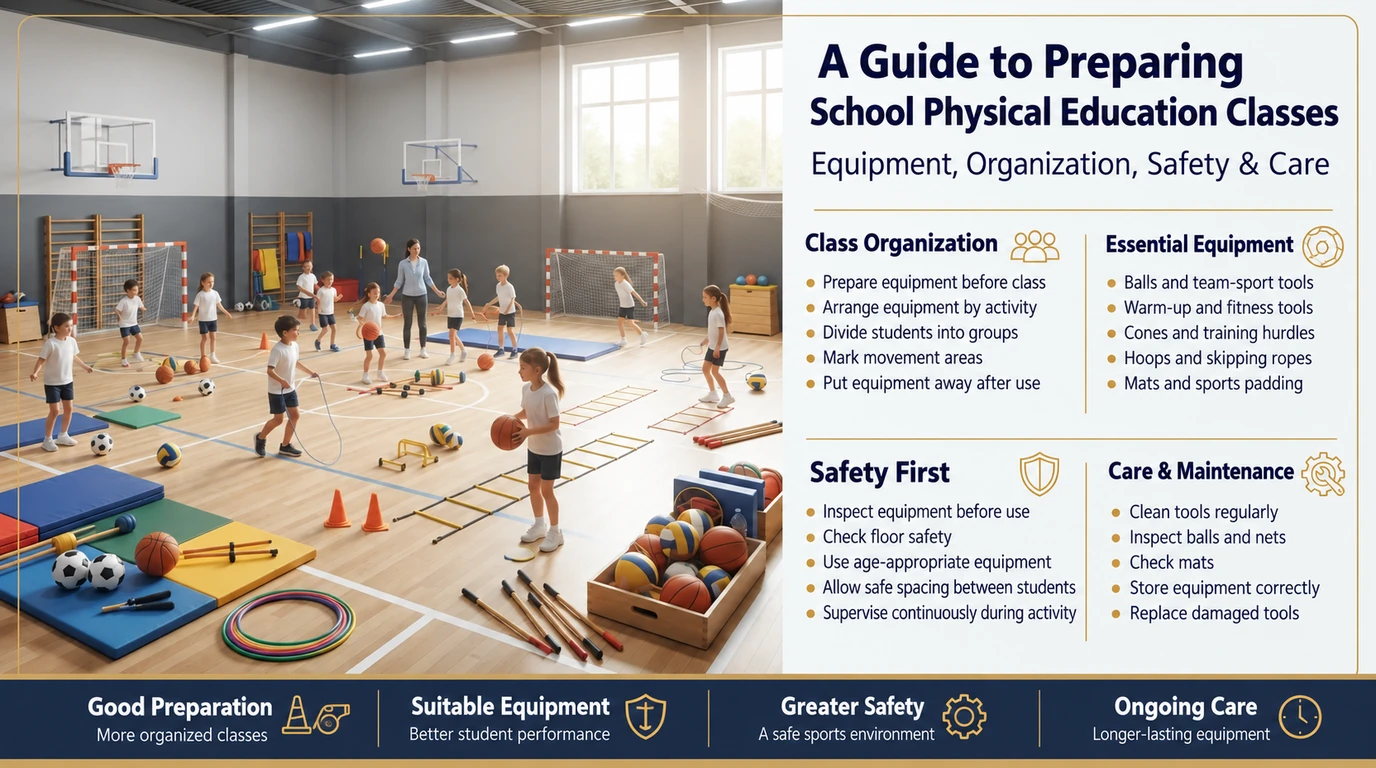
Equipping a physical education class at school requires more than simply providing balls and hoops. Choosing the right equipment should take into account students’ ages, number of users, types of activities, ease of storage, and required safety standards.
Whether the school includes kindergarten, primary, preparatory, or secondary grades, organizing equipment according to the needs of each stage helps physical education teachers deliver more structured and effective classes.
1. Choose Equipment According to the Age Group
Different school stages do not require the same type of equipment. Tools suitable for a kindergarten child may not be appropriate for a secondary school student.
Kindergarten and Early Primary School
The priority at this stage is to develop fundamental motor skills through simple and safe activities.
Suitable equipment includes:
- Lightweight balls in age-appropriate sizes.
- Training hoops.
- Colorful markers and cones.
- Ropes and balance equipment.
- Nets and small goals.
- Low-height equipment for group games.
It is preferable to choose equipment with clear colors and child-friendly dimensions while avoiding heavy equipment or components that could cause injury if used incorrectly.
Upper Primary and Preparatory School
Students can gradually transition to equipment designed to develop speed, agility, coordination, and strength.
Examples include:
- Agility ladders.
- Mini hurdles.
- Training sticks.
- Jump ropes.
- Sports balls in different sizes.
- Balance training equipment.
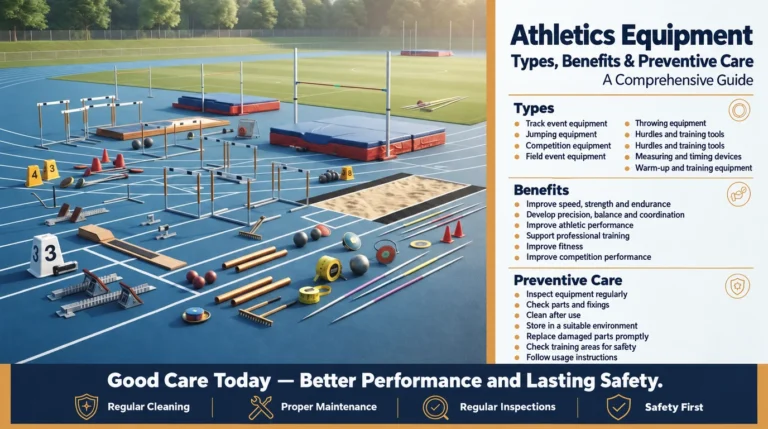
- Basic athletics equipment.
This equipment allows teachers to diversify classes and develop a wider range of motor skills.
Secondary School
At this stage, more specialized equipment can be introduced according to students’ abilities and school activities, such as:
- Team sports equipment.
- Athletics equipment.
- Fitness training equipment.
- Physical performance measurement and assessment tools.
- Speed and agility training equipment.
- Specialized equipment based on the sports activities offered by the school.
Equipment should be selected according to students’ skill levels and curriculum requirements rather than based solely on professional specifications.
2. Safety Comes Before Variety
When equipping a school, safety should be one of the most important purchasing criteria, as equipment is often used by large numbers of students throughout the school day.
Look for equipment that is:
- Free from sharp edges.
- Made from durable materials suitable for school use.
- Free from components that can easily break.
- Appropriately weighted for the student’s age.
- Easy to grip and control.
- Suitable for the intended activity.
- Easy to inspect and clean regularly.
Students should also be trained in proper equipment use, and any equipment showing signs of damage or breakage should not be used.
3. Prepare Equipment in Ready-to-Use Sets
One of the main challenges faced by physical education teachers is transporting equipment between classrooms and sports areas while preparing a class within a limited amount of time.
Using dedicated bags or ready-made equipment packages containing frequently used items can help, such as:
- Cones and markers.
- Hoops.
- Ropes.
- Training balls.
- Movement sticks.
- Balance equipment.
- Agility ladders.
This organization helps speed up class preparation and reduces the risk of losing small items or mixing equipment intended for different school stages.
4. Store Equipment in an Organized Way
Proper storage not only protects equipment but also helps prevent accidents inside the school.
A designated storage area for physical education equipment is recommended, with:
- Equipment organized by type.
- Heavy equipment separated from lightweight items.
- Suitable storage shelves or carts.
- Hallways and emergency exits kept clear.
- Balls and small equipment stored in designated containers.
- Equipment positioned securely to prevent it from falling on students.
- Equipment inspected after use and before being returned to storage.
Labeling equipment or organizing it by school stage can also help teachers quickly find the required set.
5. Equip the School Playground
If the school has an outdoor sports area, equipment should be selected to withstand daily use and weather conditions.
Consider the following:
- Material resistance to moisture and heat according to the local environment.
- Stability of goals, structures, and posts.
- Absence of sharp or exposed metal components.
- Ease of cleaning.
- Ability to store outdoor equipment when not in use.
- Regular inspection of the surface and areas surrounding the equipment.
If the sports area is completely exposed to the elements, it is preferable to select equipment according to local climatic conditions to reduce the rate of deterioration.
6. Do Not Overlook Team Sports Equipment
Physical education classes can introduce students to a variety of sports, making it useful to provide basic equipment for team activities, such as:
- Football.
- Basketball.
- Volleyball.
- Handball.
- Recreational team games suitable for different age groups.
Not all equipment needs to meet professional competition specifications. The most important factors are that it is age-appropriate, safe, and capable of withstanding school use.
7. Gradually Add Fitness and Agility Equipment
Physical education classes can be enhanced with simple equipment that helps develop fitness components without requiring large machines.
Suitable options include:
- Jump ropes.
- Agility ladders.
- Mini hurdles.
- Training barriers.
- Balance balls according to the age group.
- Lightweight functional training equipment.
These tools can be used for multiple exercises, making them suitable for schools looking to maximize the value of their equipment budget.
8. Physical Measurement and Assessment Equipment
As students get older, tools can be added to help teachers monitor physical performance and development.
These may include:
- Speed measurement tools.
- Distance measurement tools.
- Stopwatches.
- Jump or agility measurement tools according to the curriculum.
- Performance records and tracking tools.
Measurement results should be used to monitor progress and encourage students rather than simply to compare them with one another.
9. Plan the Budget in Stages
It is not necessary to equip the school with every type of equipment in a single year, particularly when the budget is limited.
The purchasing plan can be divided into stages:
Stage 1: Balls, hoops, cones, ropes, and basic movement equipment.
Stage 2: Agility, balance, and team sports equipment.
Stage 3: Measurement and assessment tools and specialized activity equipment.
Stage 4: Development of the school sports area and addition of outdoor equipment according to the school’s needs.
This approach helps direct the budget toward equipment that serves the largest number of students and classes first.
10. Maintenance and Regular Inspection
Even simple equipment requires regular inspection, especially when it is used daily by large numbers of students.
Inspect:
- Balls for damage or loss of proper shape.
- Hoops and plastic equipment for cracks.
- Ropes for signs of damage.
- Hurdles and training ladders before use.
- Goals, nets, and outdoor structures.
- Playground equipment and anchoring components.
- Metal parts for signs of rust or damage.
Any equipment showing a problem that could affect student safety should be removed from service until it is repaired or replaced.
Quick Takeaways
- Match equipment to the students’ age group rather than purchasing one set for all students.
- Make safety and durability top purchasing priorities.
- Use ready-made equipment bags and packages to simplify class preparation and reduce lost items.
- Allocate a safe and organized storage area for equipment.
- Choose outdoor sports equipment according to weather conditions and daily usage.
- Start with essential equipment, then gradually add measurement tools and specialized activities.
- Establish a regular inspection and maintenance plan from the beginning of equipment use.
Frequently Asked Questions
Can a School Be Equipped in Stages Instead of Purchasing Everything at Once?
Yes. This is a practical option for schools working with an annual budget. The school can begin with essential equipment that serves the largest number of classes, then gradually add agility equipment, team sports equipment, and measurement tools.
What Is the Difference Between Kindergarten Equipment and Middle School Equipment?
Kindergarten equipment is generally lighter, easier to handle, and more suitable for developing fundamental motor skills. Middle school students can use more varied and specialized equipment to develop speed, agility, coordination, and sports-specific skills.
Can Different Equipment Packages Be Prepared for Each School Stage?
Yes. Separate packages can be prepared for kindergarten, primary, preparatory, and secondary schools, with each package containing the equipment most suitable for the activities and target age group.
Does School Physical Education Equipment Require Regular Maintenance?
Yes. Intensive daily use makes regular inspection essential for identifying cracks, damage, or anchoring problems before they affect student safety.
Equip Your Physical Education Classes More Effectively
Al Etihad Sports Fitness provides comprehensive solutions for equipping schools with physical education and sports activity equipment, with the option to prepare packages suitable for each educational stage and budget, along with supply, installation, and technical support services.
Contact our sales team to request a customized quotation.