
Athletics includes a wide range of running, throwing, and jumping events, so the equipment required varies from one event to another. Choosing the right equipment depends on the intended level of use, whether for daily training or competitions, while regular inspection and maintenance are essential for maintaining safety and performance accuracy.
Overview of Athletics Equipment and Its Main Categories
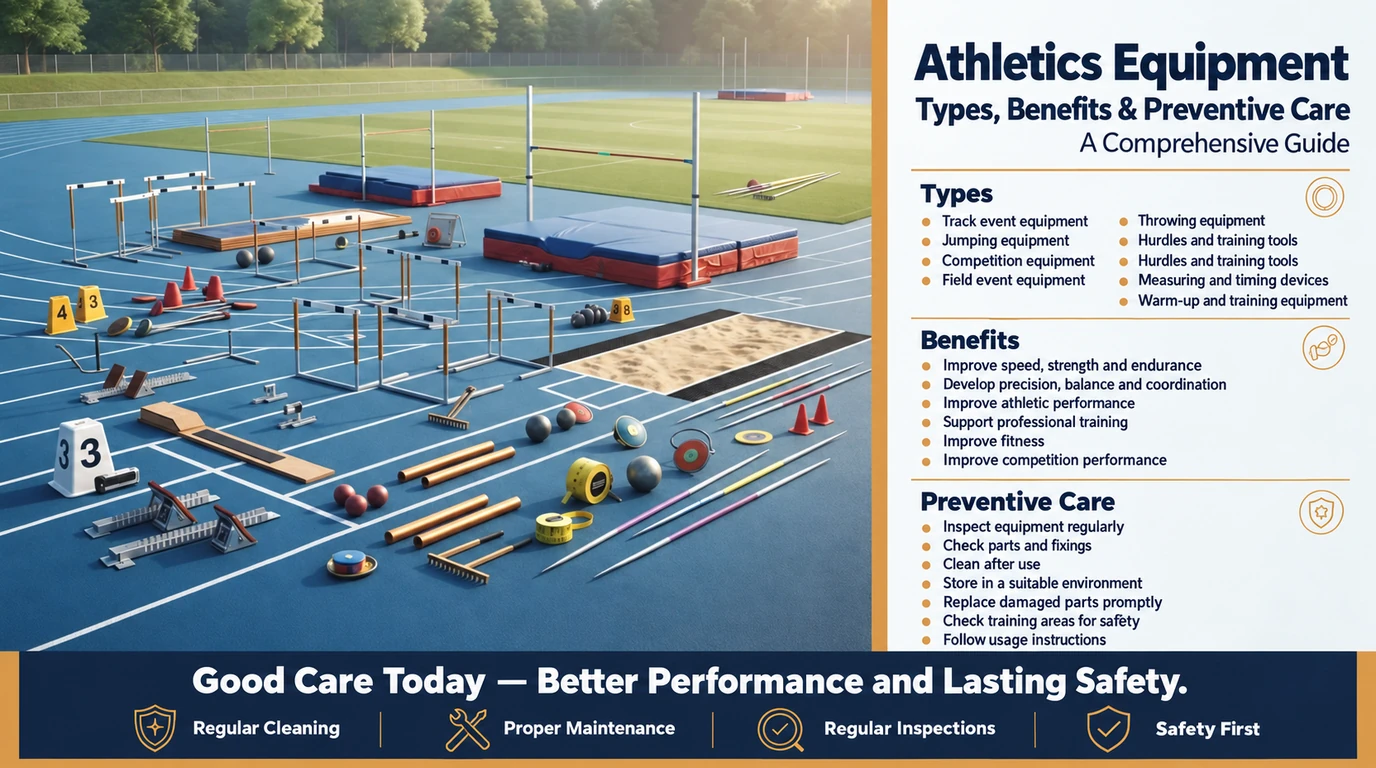
Athletics equipment can be divided into several main categories, including:
- Track event equipment: Such as hurdles, starting blocks, cones, and auxiliary equipment used to organize races.
- Throwing event equipment: Such as shot puts, discuses, javelins, and hammers, with specifications and weights varying according to the age category and event.
- Jumping event equipment: Such as high jump and pole vault uprights and landing mats, as well as sand pits designed for long jump and triple jump.
- Timing and measurement equipment: Such as electronic timing systems and distance and height measurement tools used in training and competitions.
Benefits of Athletics and the Main Muscles Targeted
Athletics is characterized by its wide variety of events, so the muscles and physical abilities required vary depending on the type of event.
Track and Running Events
Running and sprint training helps develop speed, endurance, and cardiovascular fitness. The lower-body muscles are primarily involved, particularly the quadriceps, hamstrings, and calves, along with the core muscles that help maintain proper body position while running.
Throwing Events
Throwing events rely on strength, speed, and coordination between different parts of the body. The shoulders, arms, and core are heavily involved, while the legs and hips also contribute to generating and transferring force during movement.
Jumping Events
Jumping events require explosive power and precise movement control. The quadriceps, hamstrings, calves, and core muscles are involved throughout the approach, takeoff, and landing phases.
Overall, athletics helps develop a wide range of physical abilities, including strength, speed, endurance, balance, and motor coordination, with the primary focus varying from one event to another.
Quick Tips Before Buying Athletics Equipment
Before purchasing track and field equipment, consider the following:
- Distinguish between daily training equipment and competition equipment, and verify the specifications required for the event and age category.
- When preparing a facility for official competitions, ensure that the equipment complies with World Athletics requirements and applicable regulations.
- Inspect throwing equipment regularly to verify that its weight and dimensions remain accurate and that there is no damage affecting its use.
- Do not overlook the quality of landing mats for high jump and pole vault, as they are an essential safety component.
- Choose equipment that is suitable for the track surface, field event area, and expected level of use.
- Ensure that spare parts and maintenance services are available for equipment that requires regular inspection or adjustment.
- For complete details, refer to The Guide to Buying Athletics Equipment According to World Athletics Standards.
Preventive Maintenance of Athletics Equipment
Preventive maintenance helps maintain equipment accuracy, reduce breakdowns, and extend its operational lifespan.
Inspecting Throwing Equipment
Inspect shot puts, discuses, javelins, and hammers regularly to ensure there are no cracks, damage, or noticeable changes in weight or dimensions. When equipment is used in official competitions, its compliance with the required specifications must also be verified.
Maintaining Track Surfaces
Keep the track surface clean and inspect it regularly for cracks, separation, or any damage that could affect the safety of runners. Issues should be addressed according to the type of track surface and the instructions of the manufacturer or installation provider.
Inspecting Jumping Pits
Inspect sand pits regularly and ensure that the sand is clean and free of sharp objects or debris that could pose a risk to athletes. The sand should also be maintained at an appropriate level and in suitable condition for use.
Inspecting Landing Mats
Inspect high jump and pole vault landing mats for tears, deformation, or reduced padding performance. The mat should be taken out of service if it no longer provides the required level of protection.
Storing Starting Blocks and Hurdles
Store starting blocks and hurdles in a dry location away from moisture, and clean metal components regularly to reduce the risk of rust. The adjustment and locking mechanisms should also be checked before use.
Inspecting Measurement and Timing Equipment
Electronic timing systems and measurement tools require regular inspection to ensure accurate operation. It is recommended to follow the manufacturer’s instructions regarding calibration and maintenance, as well as protecting the equipment from moisture and dust.
When Should Athletics Equipment Be Replaced?
Any equipment showing signs of damage that could affect athlete safety or performance accuracy should be taken out of service.
Indicators that require inspection or replacement include: