

Sports flooring is not merely an aesthetic element of a facility; it is a fundamental part of its safety and performance system. It affects shock absorption, stability, traction, and ease of movement. Flooring requirements also vary depending on the type of sport, the location of use, and the facility’s daily operating intensity.
Choosing the right flooring from the outset helps protect users and reduce maintenance and replacement costs in the long term.
1. Match the Flooring Type to the Sport
There is no single flooring solution suitable for all sports and activities. Therefore, the type of sport and the intended use should be determined before selecting the flooring material.
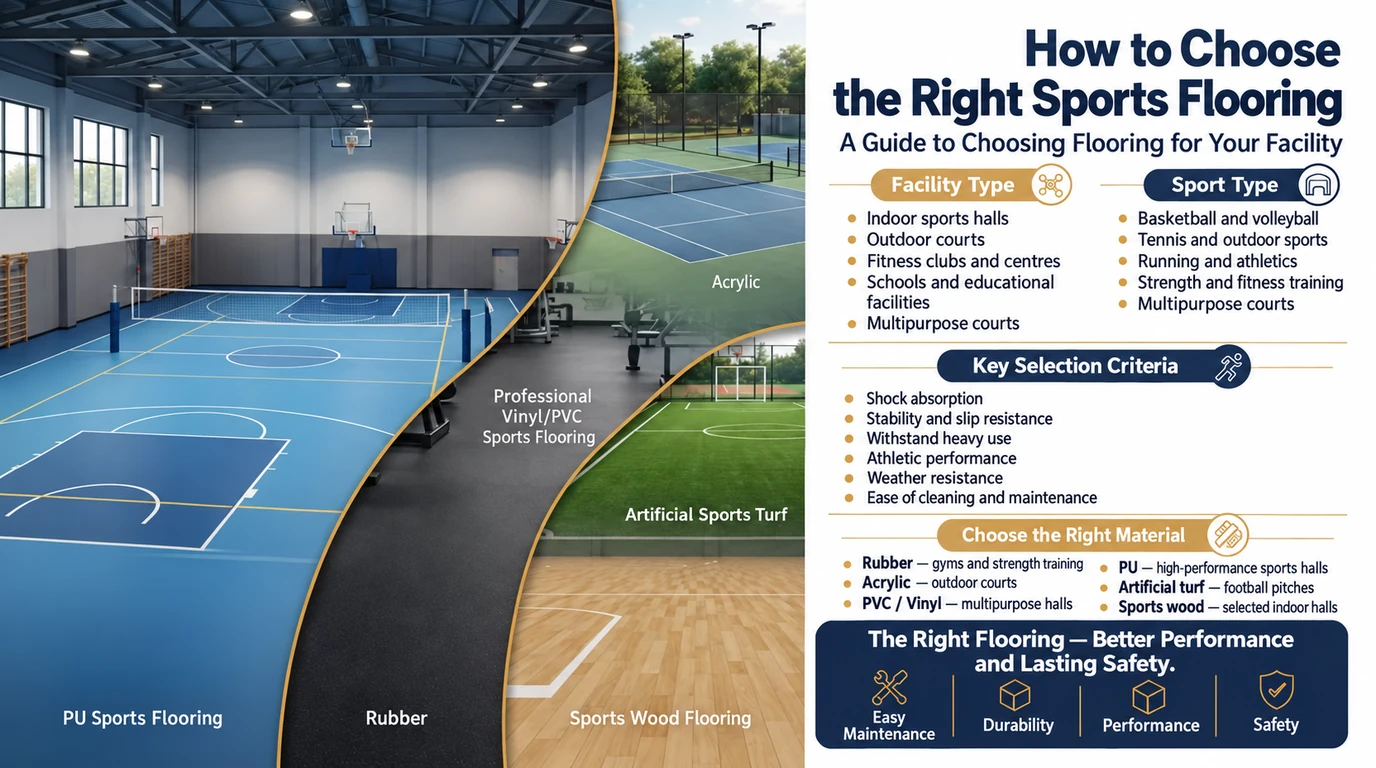
Rubber Flooring
Rubber flooring is widely used in fitness centers, weight-training areas, some running tracks, and indoor sports areas.
It is known for its ability to withstand frequent use and can provide different levels of shock absorption depending on the product type, thickness, and construction.
Artificial Turf
Artificial turf is used for football fields, outdoor sports fields, and multi-purpose fields. It is important to select a system designed to withstand the expected weather conditions and level of use.
Artificial turf systems vary in terms of fiber type, fiber height, infill system, and backing layers. Therefore, the complete system should be selected rather than the turf alone.
Acrylic Flooring
Acrylic flooring is commonly used for outdoor courts such as tennis and basketball courts.
It provides a suitable surface for movement and control, and its characteristics can vary depending on the flooring system.