September 12, 2026


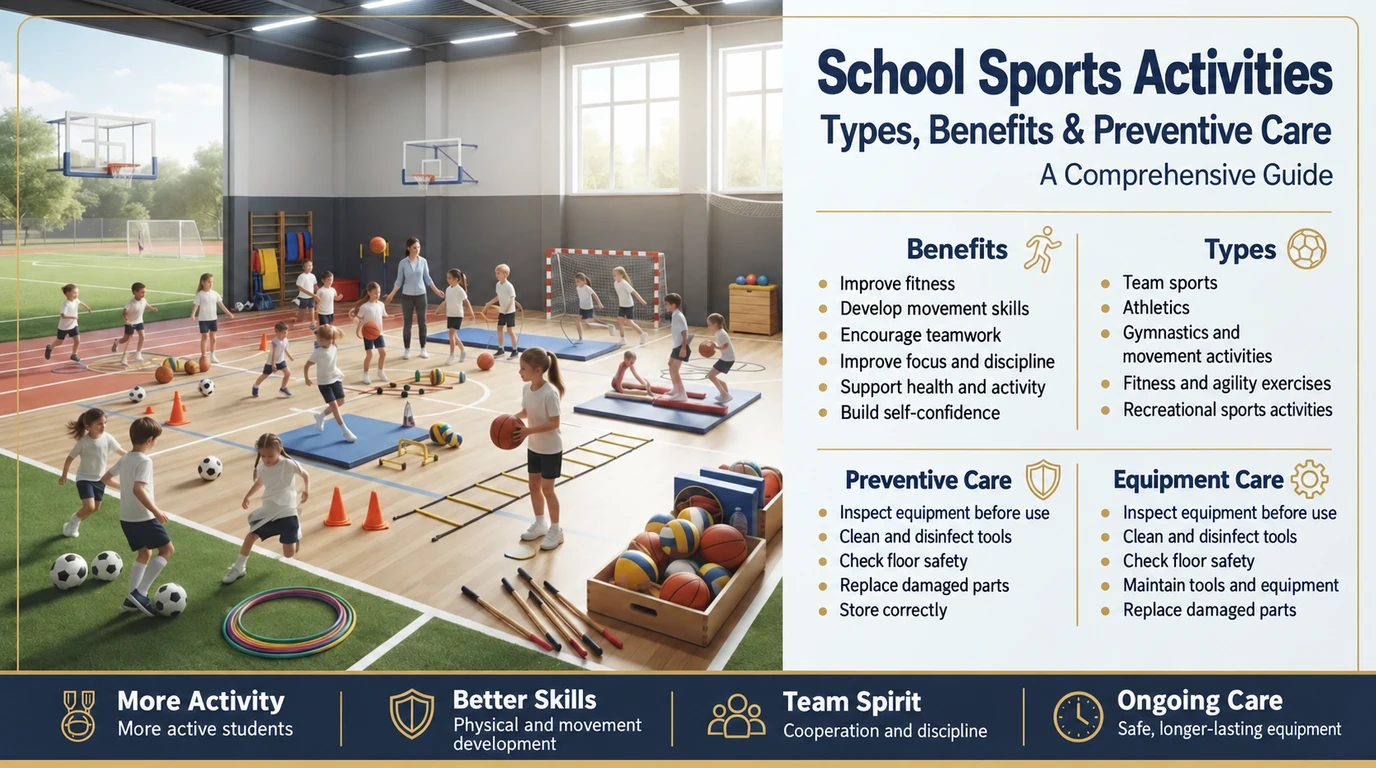
School sports activities are an essential part of students’ growth and development, helping them build their motor, physical, and social skills. Equipping a school goes beyond simply providing traditional sports equipment. Equipment should be selected according to students’ age groups, number of students, types of activities, and required safety standards.
The equipment used in schools varies depending on students’ ages and the type of activity. Key categories include:
This includes:
These tools are particularly useful in kindergartens and early primary grades to teach fundamental skills in a safe and interactive way.
This includes:
These tools allow teachers to design a variety of exercises to develop movement, agility, balance, and coordination.
These can be used with older students to monitor the development of different fitness components, such as:
These tools are best used to monitor students’ progress and encourage gradual improvement.
This includes fixed and movable equipment used in school yards and outdoor sports areas. Such equipment should be designed to withstand frequent use by large numbers of students.
Special attention should be given to structural stability and the safety of movement areas surrounding the equipment.
School activity equipment differs from professional sports training equipment. Its primary purpose is to support students’ physical and motor development and encourage them to stay active.
Balls, hoops, and small goals help develop fundamental motor skills, including:
Team activities also provide an opportunity to teach students participation, cooperation, and respect for rules.
Hurdles, agility ladders, and balance equipment help develop:
These skills provide an important foundation for learning many sports during later school years.
Measurement tools help older students understand their physical abilities and track their progress over time.
Teachers can use them to assess factors such as speed, agility, and endurance, according to curriculum objectives and the students’ age group.
Playground equipment provides opportunities for regular physical activity and helps develop movement, social interaction, and self-confidence when used in a safe and well-organized school environment.
Overall, school sports activities encourage daily movement, develop motor skills, promote cooperation and discipline, and help establish healthy physical activity habits from an early age.
Before purchasing school sports activity equipment, make sure to:
For complete details, see The Guide to Equipping a School Physical Education Class.
Frequent use by large numbers of students makes inspection and maintenance an essential part of equipment management.
Equipment used during each class should be inspected, especially:
Any cracked, broken, or unstable equipment should be removed from use until it is repaired or replaced.
Equipment used in outdoor areas may be continuously exposed to dust and moisture.
Therefore, it is recommended to:
Proper storage helps reduce the loss of small equipment and extend its service life.
Use dedicated bags, boxes, or carts to organize equipment according to activity type. Heavy equipment should be stored in stable and easily accessible locations.
Equipment should also be kept away from areas with excessive humidity or prolonged direct sunlight unless it is specifically designed for such conditions.
Outdoor playground equipment requires regular inspection due to intensive use and exposure to weather conditions.
Check the following:
Any equipment showing a problem that could put students at risk should be taken out of service until it has been inspected and repaired.
Do not rely solely on the equipment’s external appearance when assessing its condition.
Equipment may need to be replaced when there are:
The manufacturer’s instructions regarding the expected service life and safe use of each product should also be taken into consideration.
Yes. The equipment plan can be divided into several stages according to the annual budget. It is preferable to start with equipment that can be used across the largest number of classes and age groups, then gradually add specialized equipment.
Yes. Students’ abilities and needs vary significantly between age groups. Kindergartens require lightweight and simple equipment that helps develop fundamental skills, while older students can use more varied and specialized equipment.
Yes. Some equipment, such as cones, hoops, agility ladders, and ropes, can be used for a wide range of exercises and activities. This makes them a good choice for schools looking to maximize the value of their equipment budget.
Simple equipment should ideally be inspected before every class, with more comprehensive periodic inspections of equipment, structures, and outdoor areas. An immediate inspection should also be conducted whenever damage, an accident, or unusual use of the equipment is observed.
Al Etihad Sports Fitness provides comprehensive packages of school sports activity equipment designed to suit different educational stages and school budgets, along with supply, organization, and technical support solutions.
Contact our sales team to request a customized quotation.