

How to Choose the Right Gymnastics Equipment for Your Gym
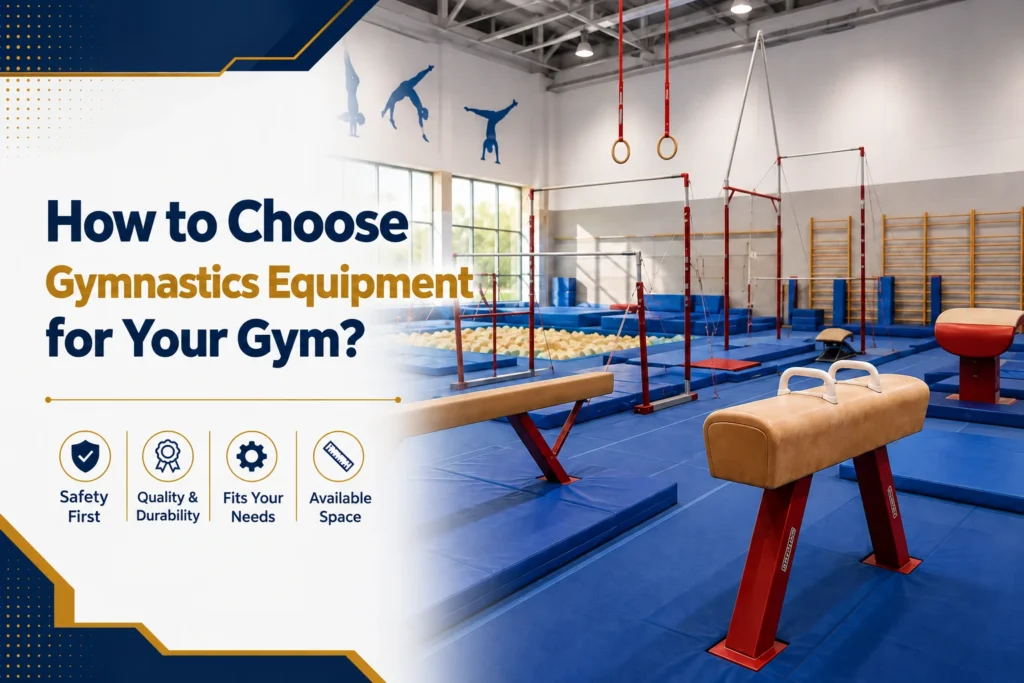
How to Choose the Right Gymnastics Equipment for Your Gym? Setting up a safe and effective gymnastics facility is not simply a matter of purchasing equipment. It is a decision that affects athlete safety, training quality, and operating costs for years to come. Whether you are equipping a school gym for beginners or a club facility for professional training and competitions, choosing the right equipment starts with understanding the facility’s needs and the athletes’ skill levels. Here are the key factors to consider before making a purchase. 1. Match the Equipment to the Training Level Equipment designed for children and beginners differs from equipment intended for advanced training and official competitions. For example, an adjustable-height balance beam designed for basic training can be a suitable option for schools and beginner classes. Competitive teams, on the other hand, require equipment with precise specifications that comply with the requirements of the International Gymnastics Federation (FIG), including dimensions, stability, and vibration resistance. Therefore, determine the intended level of use before comparing models and prices. 2. Prioritize Durability Over Price Equipment such as parallel bars and vaulting platforms is exposed to significant loads, friction, and repeated use, particularly in facilities that accommodate large numbers of athletes every day. Look for equipment made from durable materials, with strong frames, reliable fastening mechanisms, and wear-resistant surfaces. Investing in higher-quality equipment initially may be more cost-effective in the long term because it reduces the need for frequent repairs and replacements. 3. Make Safety a Priority Safety should be the first consideration when equipping a gymnastics facility, not an additional feature after purchasing the equipment. For more information, you can also refer to the guide on choosing the right sports flooring. 4. Consider Gym Space and Storage Before purchasing equipment, measure the available space and determine areas for movement, training, safety zones, and storage. Adjustable or portable balance beams and vaulting platforms can be a practical option for multi-purpose facilities, particularly schools and venues that need to change the layout between gymnastics classes and other activities. Do not forget to account for the storage space required when the equipment is not in use. 5. Don’t Overlook Maintenance and Technical Support Gymnastics equipment requires regular inspection and maintenance to maintain safety and performance. Depending on the type of equipment, inspections may include bolts, anchor points, tension systems, padding, and various surfaces. When choosing a supplier, ask specifically about: A good supplier does more than simply deliver and install the equipment; they help you keep it safe and effective throughout its service life. Conclusion: 4 Points to Consider Before Buying Gymnastics Equipment Frequently Asked Questions How much does it cost to equip a medium-sized school gymnastics gym? The cost varies depending on the gym’s size, number of equipment pieces, equipment level, type of flooring, and required safety systems. It is therefore preferable to conduct a site assessment and request a customized quotation rather than relying on a general estimate. Can installation be provided with the supply of gymnastics equipment? Yes. Supply and installation can be provided together, with the option of developing a regular maintenance plan after handover based on the type of equipment and the nature of its use. Can the equipment be customized according to the gym’s available space? Yes. The setup process typically begins with assessing the available space and identifying the facility’s requirements, followed by recommending suitable dimensions and layouts that make the best use of the available area while maintaining appropriate safety and movement zones. Equip Your Gym with the Right Equipment At Al-Etihad Sports Fitness, we provide a comprehensive range of gymnastics equipment suitable for schools, clubs, and sports facilities, along with supply, installation, maintenance, and after-sales technical support services.
A Guide to Choosing Fitness Equipment for Your Gym
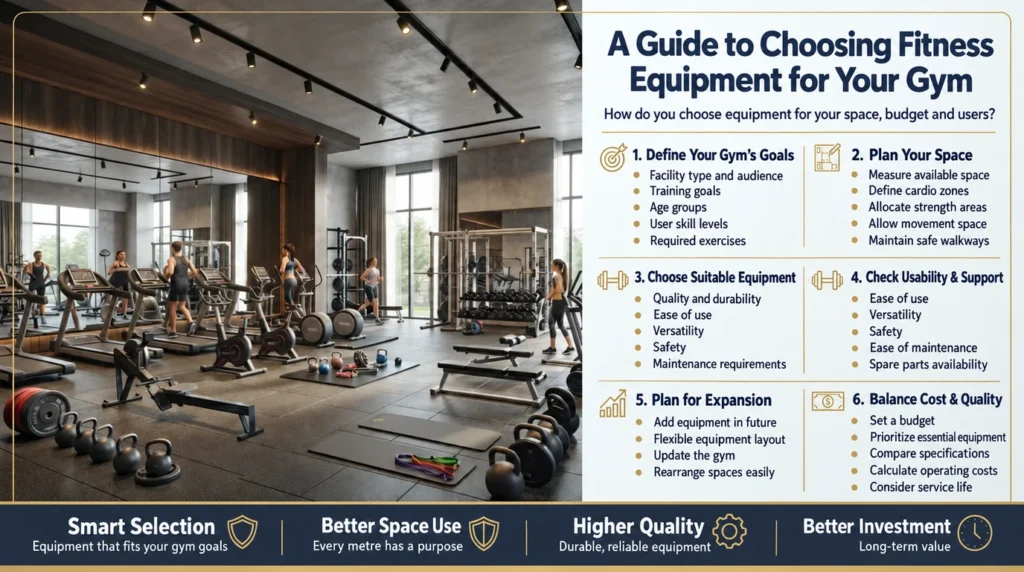
Fitness Equipment Selection Guide for Your Gym Setting up a successful fitness facility does not begin with buying equipment. It starts with understanding the type of facility, who will use it, the expected number of users, and the level of daily usage. Whether you are equipping a fitness club, hotel gym, or sports facility within a government organization, proper planning helps you make the best use of your available space and budget. 1. Determine the Usage Category: Commercial or Light Commercial Before selecting any equipment, determine the expected level of usage. Commercial-grade equipment is designed to operate for extended periods and accommodate a large number of users each day. It typically features more durable components and operating systems designed for intensive use. Light-commercial equipment, on the other hand, may be suitable for facilities with limited usage, such as some hotel gyms or residential complexes. However, it may not be the best choice for a busy gym operating for long hours every day. Therefore, do not base your decision on price alone. Compare the equipment’s classification with the expected usage level before purchasing. 2. Identify the Gym’s Needs Across the Main Equipment Categories A complete fitness facility can generally be divided into five main equipment categories: There is no single equipment ratio that suits every gym. A facility focused on beginners may need a greater emphasis on cardio and guided strength machines, while professional gyms may require more space for free weights and functional training. 3. Plan the Space Before Purchasing Equipment One of the most common mistakes is purchasing equipment before creating a clear floor plan for the gym. Before signing a purchase agreement, determine the locations of equipment, circulation paths, safety zones, and storage areas. The clearance requirements specified by the manufacturer for each machine should be followed, while also considering the movement of users and staff throughout the facility. Free-weight and functional-training areas also require suitable flooring capable of withstanding intensive use and impact. You can also refer to the Guide to Choosing the Right Sports Flooring for Your Facility. Ventilation and Air Conditioning Ventilation is just as important as equipment layout. Gyms containing a large number of cardio machines require an appropriate ventilation and air-conditioning system based on the nature of use and the number of people present during peak hours. When positioning equipment, also consider accessibility to air outlets and maintenance equipment. 4. Choose Equipment Based on Quality and Durability When comparing equipment, do not focus solely on appearance or the number of features. Examine the quality of the frame, components, and parts that are exposed to frequent use. For cardio equipment, pay attention to the motor, drive system, and usage capacity. For strength equipment, inspect the frame, movement points, cables, handles, and padding. For free weights and functional-training equipment, priority should be given to material quality, stability, and the equipment’s ability to withstand repeated use. 5. Check the Warranty and After-Sales Services The warranty is an essential part of the purchasing decision, not merely an additional benefit. Ask the supplier about: It is preferable for all warranty terms and conditions to be clearly documented before completing the purchase agreement. 6. Make Sure Spare Parts and Maintenance Are Available Even the best equipment requires regular maintenance when subjected to intensive use.
Yoga and Pilates Equipment: Types, Benefits, and Preventive Care — A Comprehensive Guide
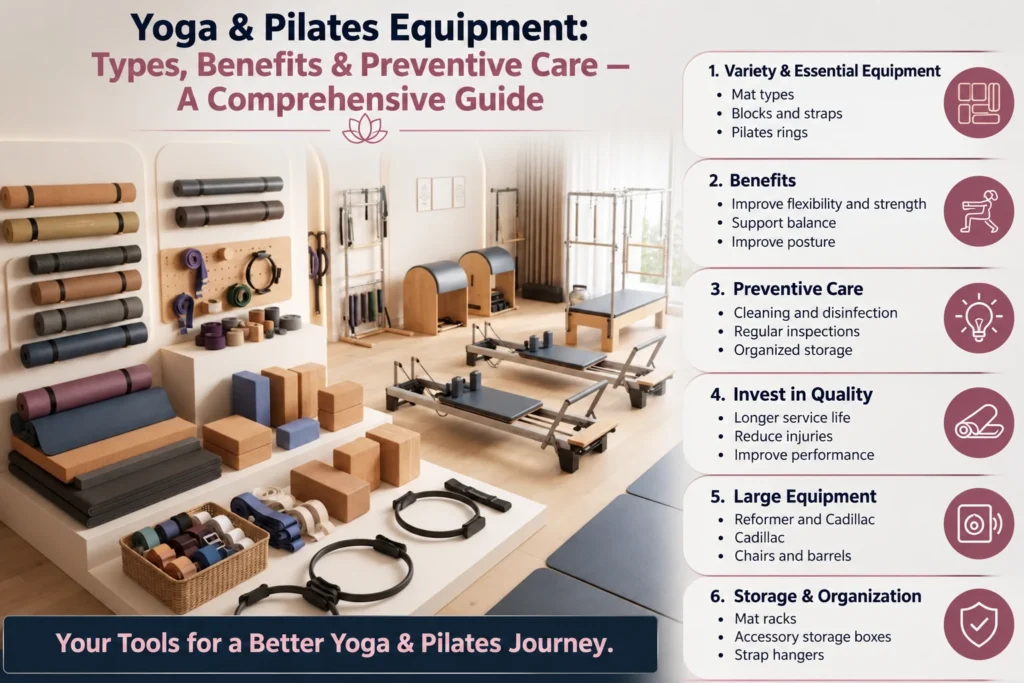
Yoga and Pilates equipment helps diversify workouts and improve training quality, whether in specialized studios or multipurpose fitness facilities. Choosing the right equipment depends on the type of classes offered, the participants’ fitness levels, and the frequency of use, while preventive care is essential for maintaining equipment safety and extending its service life. Overview of Yoga and Pilates Equipment and Categories The main Yoga and Pilates equipment and accessories include: Benefits of Yoga and Pilates Equipment and the Main Muscles Targeted Yoga and Pilates exercises can help develop several aspects of fitness, including flexibility, balance, movement control, and core strength. The effect of each piece of equipment varies depending on the exercise and how it is used. Yoga Mats Yoga mats provide a stable and comfortable surface for balance poses, stretching, and floor exercises. Movements performed on the mat engage the core and stabilizing muscles around the joints to maintain balance and control. Yoga Blocks and Straps These tools help modify certain poses and support users in gradually achieving an appropriate range of motion. They can be used in flexibility and stretching exercises, particularly for beginners or participants who need additional support. Pilates Reformer The Reformer provides adjustable resistance through its spring system, allowing a wide variety of exercises that engage the core, legs, and arms to varying degrees. Reformer exercises can also contribute to improved movement control, balance, and body awareness when performed correctly. Pilates Ring The Pilates ring is used to add resistance to a variety of exercises. Depending on how it is used, it can target the thigh muscles and upper body while also encouraging greater focus on movement control and stability. Resistance Bands Resistance bands provide different levels of resistance and can be used to train both the upper and lower body. They also allow for greater exercise variety without requiring large pieces of equipment. Overall, Yoga and Pilates exercises can help improve flexibility, balance, movement control, and core strength, with results varying according to the training program and the participant’s fitness level. Quick Tips Before Buying Yoga and Pilates Equipment Before equipping your studio or purchasing equipment, make sure to:
Guide to Buying Athletics Equipment According to World Athletics Standards
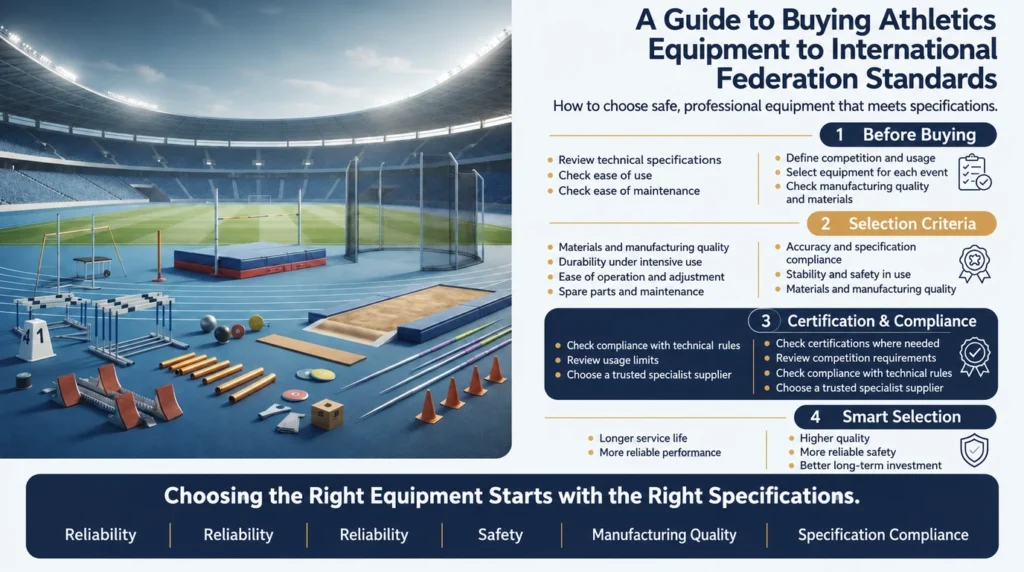
Guide to Buying Athletics Equipment According to World Athletics Standards Athletics includes a wide range of track and field events, and each event has different requirements in terms of equipment, space, and safety. Therefore, careful planning before purchasing helps ensure that you choose the right equipment for the intended use, whether the goal is daily training or hosting official competitions. 1. Distinguish Between Training Equipment and Competition Equipment Not every facility needs equipment designed for official competitions. For daily training, suitable training equipment can be selected based on the type of use and the athletes’ level. For facilities that host official competitions, however, the requirements of World Athletics and the regulations applicable to each event must be taken into consideration, particularly for throwing and jumping events, where specific equipment weights, dimensions, and specifications apply. Therefore, determine the intended use before purchasing, as this decision directly affects the type of equipment and the required budget. 2. Choosing Equipment for Track Events Track events require a range of equipment to help organize races and maintain appropriate levels of safety and accuracy. Hurdles Choose hurdles with adjustable heights that are appropriate for the athletes’ age group and competition level. They should remain stable during use and be designed to fall in the intended manner when struck by an athlete. Starting Blocks High-quality starting blocks help athletes maintain a stable starting position. When preparing a facility for competitions, select models that comply with the requirements of the event and are suitable for the track surface. Cones and Race Organization Equipment Cones and other auxiliary equipment are used to mark lanes and organize movement within the facility. Products that are highly visible and easy to transport and store are recommended. 3. Preparing Field Events Field event areas require different types of equipment depending on the competition, with safety and specification accuracy being top priorities. Throwing Equipment This includes shot puts, discus, javelins, and hammers. The appropriate weights and dimensions must be selected according to the athlete category and event. For facilities hosting official competitions, ensure that the equipment complies with the required specifications. Its condition should also be inspected regularly to ensure there is no damage or alteration that could affect its weight or dimensions. High Jump and Pole Vault These events require uprights, support equipment, and suitable landing mats. Landing mats are among the most important safety components. They should therefore be selected according to the intended use, with the padding, covers, and attachment points inspected regularly. Long Jump and Triple Jump These events rely on properly equipped and well-maintained sand pits. The sand should be kept clean and free of foreign or sharp objects, and it should be leveled regularly to maintain a suitable landing area. 4. Timing and Measurement Equipment Accuracy plays a fundamental role in athletics results, particularly in official competitions. Equipment may include: When preparing a facility for competitions, choose systems that are appropriate for the competition level and comply with applicable regulations, while also paying attention to regular calibration and maintenance. 5. Equip the Track and Field Areas as an Integrated System Schools, clubs, and sports federations may need to accommodate several events within the same facility. Therefore, it is preferable to plan the track, field event areas, measurement equipment, and timing systems as part of one integrated solution. Advance planning helps to: 6. Include Maintenance and Storage in the Purchasing Plan Purchasing equipment is not the end of the preparation process. Athletics equipment requires regular inspection, cleaning, and proper storage to maintain its performance. Make sure to establish an inspection plan covering throwing equipment, landing mats, starting blocks, hurdles, and measurement and timing systems. Equipment should also be stored in dry, secure areas away from conditions that could cause damage. Quick Summary Frequently Asked Questions Can a training track later be upgraded to a competition-ready facility? This may be possible in some cases, but it depends on the condition of the track, the facility’s existing equipment, available space, and the requirements of the relevant events. Therefore, a technical site assessment is recommended before determining the
Sports Flooring: Types, Benefits, and Preventive Care — A Comprehensive Guide
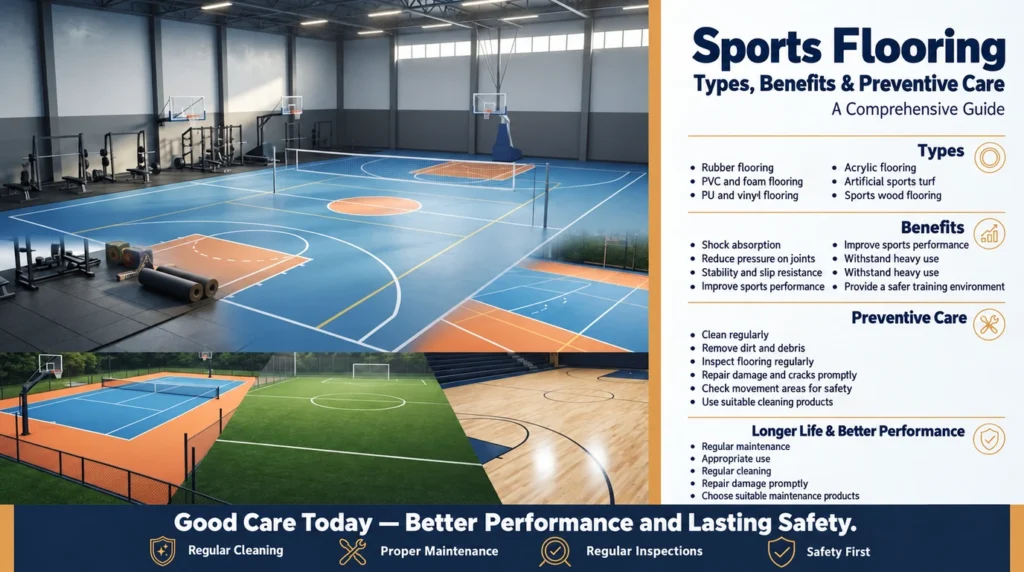
Sports Flooring: Types, Benefits, and Preventive Care — A Comprehensive Guide Sports flooring is an essential part of any sports facility. It affects more than just the appearance of the space; it plays an important role in player comfort, stability, and safety during movement. The right flooring choice depends on the type of sport, usage frequency, installation environment, performance requirements, and maintenance needs. Overview of Sports Flooring Types Sports flooring is available in a variety of systems and materials, with each type designed for specific activities and facilities: Benefits of Sports Flooring Unlike training equipment, which targets specific muscle groups, the primary function of sports flooring is to provide a suitable surface for movement, stability, and safety. 1. Shock Absorption Shock-absorbing properties can help reduce the impact associated with running, jumping, and repeated landings. This is particularly important in sports such as volleyball, gymnastics, and basketball. The level of shock absorption varies from one flooring system to another, so the flooring should be selected according to the requirements of the sport rather than based solely on thickness or appearance. 2. Stability and Appropriate Traction Players need a surface that provides an appropriate level of traction without becoming slippery or restricting movement. This feature is especially important in sports that involve sudden stops and changes of direction, such as basketball, tennis, and certain types of athletic training. 3. Improved Training Comfort An appropriate flooring system can provide a more comfortable surface for training compared with surfaces that are not designed for sports use. This becomes particularly important in facilities that accommodate large numbers of users or host long and frequent training sessions. 4. Protection of the Facility’s Base Surface Certain flooring types, such as rubber flooring, can help protect the underlying surface from the impact of weights, equipment, and user activity, particularly in fitness centers and weight-training areas. 5. Supporting Athletic Performance The type of surface can influence how players move and interact with the floor during running, jumping, stopping, and changing direction. Therefore, the flooring system should be selected according to the specific requirements of each sport. Quick Tips Before Buying Sports Flooring Before making a purchase, consider the following: For more details, see How to Choose the Right Sports Flooring for Your Facility? Preventive Maintenance for Sports Flooring Maintenance requirements vary depending on the flooring type, but regular inspection and cleaning help preserve performance and appearance while extending the flooring’s service life. Artificial Turf Artificial turf requires regular cleaning and brushing to remove dirt and debris that accumulate between the fibers. The drainage system should also be inspected to ensure that water does not accumulate, particularly after rainfall or washing. Acrylic Flooring The court surface should be cleaned regularly to remove dust and debris that could affect traction and movement. The surface should also be inspected periodically for cracks or wear, with any issues addressed according to the flooring system and the manufacturer’s instructions. Rubber Flooring Rubber flooring should be cleaned using suitable, non-abrasive products. Seams, edges, and areas exposed to heavy use should be inspected regularly. In weight-training areas, any cuts or separation in the flooring should be addressed early to prevent the damage from spreading. Sandwich Flooring and Multi-Layer Systems These systems should be cleaned using products appropriate for the specific surface, while seams, joints, and edges should be inspected regularly. Any raised or separated section of flooring should be assessed and repaired before it develops into a problem that could affect user safety. Sports Vinyl Flooring Heavy equipment should not be dragged directly across vinyl flooring. Appropriate methods should be used when moving machines and equipment. The floor should preferably be cleaned with mild products compatible with the manufacturer’s instructions, while edges and seams should be inspected regularly. Common Mistakes to Avoid When Caring for Sports Flooring Certain practices can shorten the flooring’s service life or affect its performance characteristics: When Does Sports Flooring Need Maintenance or Replacement? Do not wait for significant damage before carrying out maintenance. Signs that the flooring requires inspection include: If damage affects safety, the affected area should be taken out of service until it has been properly assessed and repaired. Conclusion Choosing the right sports flooring begins with understanding the nature of the sport, usage levels, and environmental conditions surrounding the facility. Rubber flooring has different applications from artificial turf, acrylic, or vinyl flooring, and each system has its own characteristics and maintenance requirements. Installation quality is just as important as material quality. Therefore, it is important to choose a supplier capable of providing a complete solution that includes site assessment, supply, installation, and maintenance. Al Etihad Sports Fitness provides comprehensive solutions for the supply, installation, and maintenance of various types of sports flooring, tailored to clubs, schools, hotels, and sports facilities. Contact the sales team to request a customized quotation.
Indoor Game Equipment: Types, Benefits, and Preventive Care — A Comprehensive Guide
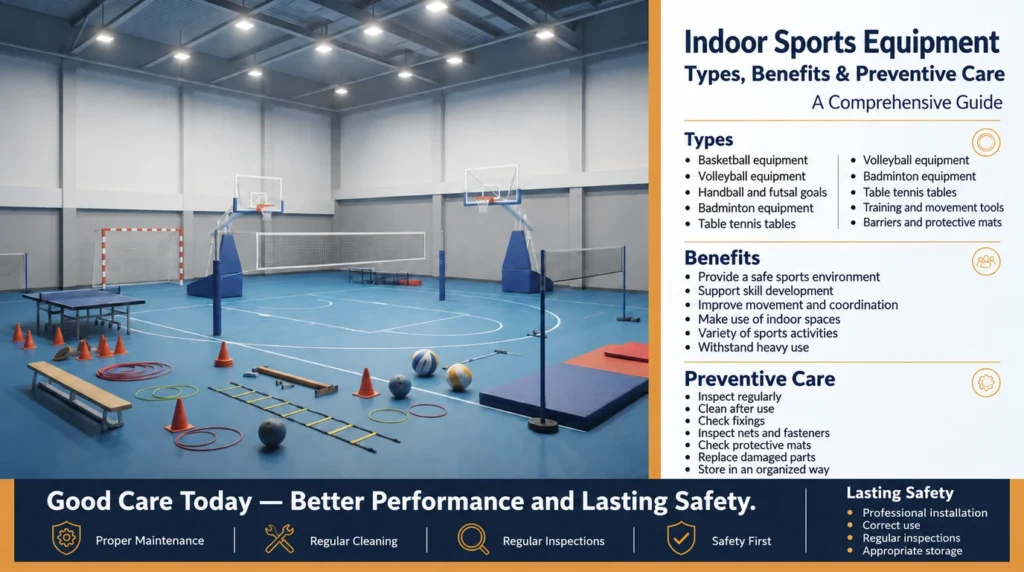
Indoor Game Equipment: Types, Benefits, and Preventive Care — A Comprehensive Guide Indoor game equipment is a suitable choice for entertainment centers, clubs, hotels, family centers, and multipurpose halls. It combines entertainment, physical activity, and social interaction, ranging from game tables and arcade machines to children’s play areas. Choosing the right equipment depends on the target age group, available space, daily usage level, and required safety standards. Overview of Indoor Game Equipment Types Indoor game equipment can be divided into several main categories, each with different applications: Arcade and Electronic Games This category includes recreational boxing machines, interactive arcade games, and gaming machines that use screens or sensors. These games are suitable for entertainment centers, family recreation areas, and venues targeting young people and adults. They require an appropriate power supply and sufficient safe space around each machine. Indoor Play Structures and Active Games for Children These include indoor mazes, ball pits, climbing structures, and movement-based play equipment designed for children. Such areas should be designed according to the users’ age groups, with suitable protective padding, adequate movement space, and regular equipment inspections. Billiards and Snooker Tables Billiards and snooker tables are among the most popular indoor entertainment options for adults. They require sufficient clearance around the table so players can use their cues freely. The table should also be placed on a level surface to ensure accurate gameplay and maintain stability. Table Tennis Tables Table tennis combines entertainment with physical activity and requires enough space around the table for players to move and change direction. A durable, high-quality playing surface should be selected, especially for facilities where the table is used daily. Foosball Tables Foosball provides an engaging group experience for entertainment centers and multipurpose halls. It also allows several players to participate at the same time. Air Hockey Air hockey tables rely on a smooth playing surface and an air system that helps the puck glide across the table. They therefore require a suitable power supply and regular maintenance of the operating system and playing surface. Benefits of Indoor Game Equipment Indoor game equipment is not necessarily designed to build strength or fitness in the same way as specialized training equipment, but it offers a range of physical, social, and recreational benefits. 1. Improving Hand-Eye Coordination Games such as table tennis, foosball, and air hockey require players to track the movement of a ball or object and respond quickly. This can help develop reaction speed and hand-eye coordination. 2. Supporting Physical Activity Although some games are primarily recreational, they still involve movement, standing, and changes in body position, particularly games that require direct interaction between players. 3. Developing Children’s Motor Skills Mazes, climbing structures, and movement-based play areas give children opportunities to develop skills such as balance, coordination, and body control, provided the equipment is age-appropriate and designed for safe use. 4. Encouraging Social Interaction Many indoor games support group play and friendly competition, making them suitable for family centers, clubs, and entertainment venues. 5. Providing a Diverse Entertainment Experience Combining game tables, arcade machines, and children’s play areas can attract different age groups and provide visitors with a variety of activities within the same facility. Quick Tips Before Buying Indoor Game Equipment Before setting up an indoor gaming area, consider the following:
Team Sports Equipment: Types, Benefits, and Preventive Maintenance — A Comprehensive Guide
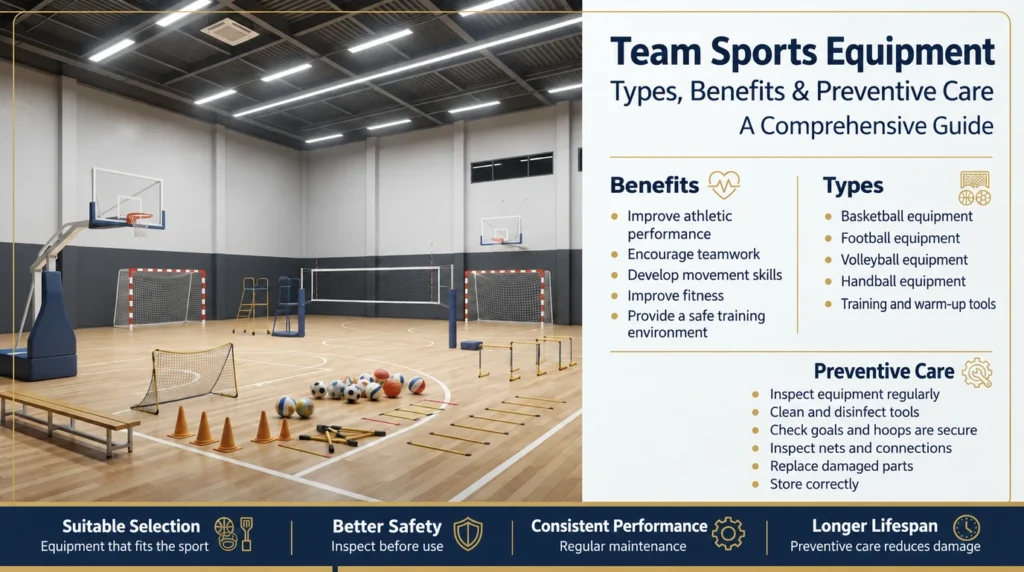
Team Sports Equipment: Types, Benefits, and Preventive Maintenance — A Comprehensive Guide Team sports require equipment designed to withstand frequent use, training sessions, and competitions, with requirements varying from one sport to another. Therefore, choosing the right equipment involves more than simply evaluating material quality. It also includes safety, appropriate sizing, intended level of use, and ease of maintenance. Overview of Team Sports Equipment Equipment varies according to the nature of each sport. Key categories include: Football Essential equipment includes: Goals and nets should be selected according to the size of the playing field, age group, and level of use, while ensuring that the goal is stable during play. Volleyball Essential equipment includes: Net posts require secure anchoring, and the net height should be adjusted according to the age group and competition level. Basketball Key equipment includes: Particular attention should be given to the stability of the structure, backboard, and rim, especially in facilities that experience intensive use. Handball Essential equipment includes: The stability of the goal and condition of the net should be checked before use. Hockey Hockey equipment varies depending on the type of game and facility, but may include: Protective equipment requires regular inspection due to the physical contact and collisions involved in the sport. Benefits and Key Muscles Targeted Team sports combine physical activity, motor skills, and social interaction. The muscles and physical abilities emphasized vary according to the nature of each sport. Football Football involves repeated running, changes of direction, acceleration, and stopping. As a result, the quadriceps, hamstrings, calves, and core muscles are continuously engaged. Regular training also helps improve cardiovascular fitness, speed, and agility. Volleyball Volleyball requires jumping, landing, and rapid movement, engaging the quadriceps, glutes, and calf muscles. Serving, hitting, and passing also rely on the shoulders, arms, and core muscles. Basketball Basketball combines running, jumping, stopping, and changing direction, placing significant demands on the lower-body muscles. The shoulders, arms, and core are also engaged during passing, shooting, and ball control. Handball Handball combines running, jumping, throwing, and changes of direction, engaging the legs, core, shoulders, and arms. It also requires a high level of coordination between the upper and lower body during throwing and movement. Hockey Hockey requires continuous stick control while moving, engaging the forearms, shoulders, and core, along with the leg muscles used for movement and changes of direction. Overall, team sports help develop cardiovascular fitness, strength, speed, agility, coordination, and teamwork. Quick Tips Before Buying Team Sports Equipment Before purchasing equipment, make sure to: For complete details, see How to Equip Your Sports Team with the Right Equipment. Preventive Maintenance for Team Sports Equipment Regular maintenance helps reduce equipment failures and identify problems before they affect player safety. Inspecting Football and Handball Goals Goals and anchoring points should be inspected regularly to ensure stability and confirm that there is no structural damage. Nets should also be checked for tears or loose sections and properly secured before use. No goal should be used if it is unstable or has not been properly secured. Basketball System Maintenance Regularly inspect the structure, backboard, rim, and mounting points, particularly for systems exposed to vibration or frequent use. Pay attention to unusual movement, noises, or looseness at mounting points, and stop using the equipment if a problem requiring inspection is identified. Inspecting Volleyball Nets and Posts Inspect net posts, anchoring systems, ropes, and tensioning mechanisms before use and on a regular basis. Make sure the net height and tension are correctly adjusted for the activity. Inspecting Hockey Sticks and Balls Inspect sticks for cracks, breaks, or damaged edges, and replace any stick that is no longer safe to use. Balls or pucks should also be inspected to ensure there is no damage that could affect gameplay. Inspecting Protective Equipment Shin guards, gloves, helmets, and other protective equipment should be inspected regularly. Any item showing signs of damage or that has lost its ability to provide the required level of protection should be replaced according to the manufacturer’s instructions. Storing Sports Equipment Proper storage is an essential part of maintenance, especially in clubs and schools where equipment is used frequently. It is recommended to: When Should Equipment Be Replaced? Do not wait for equipment to fail during a match before deciding to replace it. Signs that require inspection or replacement include: For equipment used in competitions, it is also important to ensure that it continues to comply with the required specifications and regulations. Conclusion Choosing team sports equipment should begin by identifying the sport, age group, and intended level of use, followed by selecting equipment that matches the requirements of training or competition. Goals, basketball systems, net posts, balls, sticks, and protective equipment are among the items that require regular inspection, as their condition directly affects player safety and training quality. Proper storage and preventive maintenance also help extend equipment life, reduce breakdowns, and lower replacement costs. Al Etihad Sports Fitness provides comprehensive solutions for equipping clubs, schools, and sports facilities with team sports equipment, along with supply, installation, maintenance, and technical support services. Contact our sales team to request a customized quotation.
School Sports Activities: Types, Benefits, and Preventive Maintenance — A Comprehensive Guide
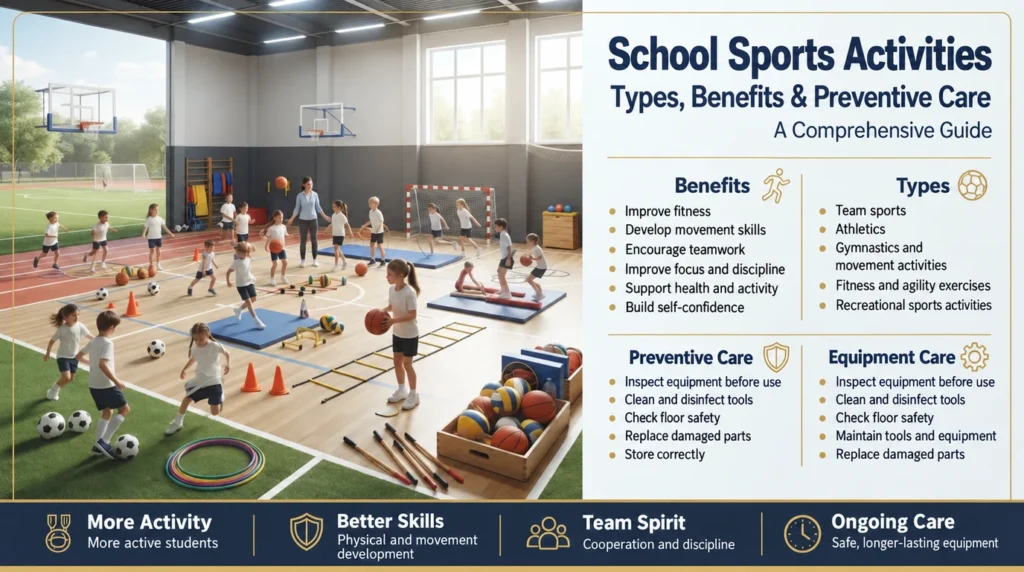
School Sports Activities: Types, Benefits, and Preventive Maintenance — A Comprehensive Guide School sports activities are an essential part of students’ growth and development, helping them build their motor, physical, and social skills. Equipping a school goes beyond simply providing traditional sports equipment. Equipment should be selected according to students’ age groups, number of students, types of activities, and required safety standards. Overview of School Sports Activity Equipment The equipment used in schools varies depending on students’ ages and the type of activity. Key categories include: Mini Team Sports Equipment This includes: These tools are particularly useful in kindergartens and early primary grades to teach fundamental skills in a safe and interactive way. Movement and Motor Coordination Equipment This includes: These tools allow teachers to design a variety of exercises to develop movement, agility, balance, and coordination. Physical Measurement and Assessment Tools These can be used with older students to monitor the development of different fitness components, such as: These tools are best used to monitor students’ progress and encourage gradual improvement. School Playground Equipment This includes fixed and movable equipment used in school yards and outdoor sports areas. Such equipment should be designed to withstand frequent use by large numbers of students. Special attention should be given to structural stability and the safety of movement areas surrounding the equipment. Benefits and Key Skills Developed School activity equipment differs from professional sports training equipment. Its primary purpose is to support students’ physical and motor development and encourage them to stay active. Mini Team Sports Balls, hoops, and small goals help develop fundamental motor skills, including: Team activities also provide an opportunity to teach students participation, cooperation, and respect for rules. Movement and Coordination Equipment Hurdles, agility ladders, and balance equipment help develop: These skills provide an important foundation for learning many sports during later school years. Physical Measurement and Assessment Tools Measurement tools help older students understand their physical abilities and track their progress over time. Teachers can use them to assess factors such as speed, agility, and endurance, according to curriculum objectives and the students’ age group. Playground Equipment Playground equipment provides opportunities for regular physical activity and helps develop movement, social interaction, and self-confidence when used in a safe and well-organized school environment. Overall, school sports activities encourage daily movement, develop motor skills, promote cooperation and discipline, and help establish healthy physical activity habits from an early age. Quick Tips Before Purchasing Before purchasing school sports activity equipment, make sure to: For complete details, see The Guide to Equipping a School Physical Education Class. Preventive Maintenance for School Sports Activity Equipment Frequent use by large numbers of students makes inspection and maintenance an essential part of equipment management. Inspect Equipment Before Each Class Equipment used during each class should be inspected, especially: Any cracked, broken, or unstable equipment should be removed from use until it is repaired or replaced. Cleaning Movement and Coordination Equipment Equipment used in outdoor areas may be continuously exposed to dust and moisture. Therefore, it is recommended to: Organized Storage Proper storage helps reduce the loss of small equipment and extend its service life. Use dedicated bags, boxes, or carts to organize equipment according to activity type. Heavy equipment should be stored in stable and easily accessible locations. Equipment should also be kept away from areas with excessive humidity or prolonged direct sunlight unless it is specifically designed for such conditions. Inspecting School Playground Equipment Outdoor playground equipment requires regular inspection due to intensive use and exposure to weather conditions. Check the following: Any equipment showing a problem that could put students at risk should be taken out of service until it has been inspected and repaired. When Should Equipment Be Replaced? Do not rely solely on the equipment’s external appearance when assessing its condition. Equipment may need to be replaced when there are: The manufacturer’s instructions regarding the expected service life and safe use of each product should also be taken into consideration. Quick Takeaways Frequently Asked Questions Can a School Be Equipped in Stages? Yes. The equipment plan can be divided into several stages according to the annual budget. It is preferable to start with equipment that can be used across the largest number of classes and age groups, then gradually add specialized equipment. Do Kindergartens Need Different Equipment from Secondary Schools? Yes. Students’ abilities and needs vary significantly between age groups. Kindergartens require lightweight and simple equipment that helps develop fundamental skills, while older students can use more varied and specialized equipment. Can the Same Equipment Be Used for More Than One Activity? Yes. Some equipment, such as cones, hoops, agility ladders, and ropes, can be used for a wide range of exercises and activities. This makes them a good choice for schools looking to maximize the value of their equipment budget. How Often Should School Sports Equipment Be Inspected? Simple equipment should ideally be inspected before every class, with more comprehensive periodic inspections of equipment, structures, and outdoor areas. An immediate inspection should also be conducted whenever damage, an accident, or unusual use of the equipment is observed. Equip Your School Sports Activities with a Complete Solution Al Etihad Sports Fitness provides comprehensive packages of school sports activity equipment designed to suit different educational stages and school budgets, along with supply, organization, and technical support solutions. Contact our sales team to request a customized quotation.
Outdoor Playground Equipment: Types, Benefits, and Preventive Maintenance
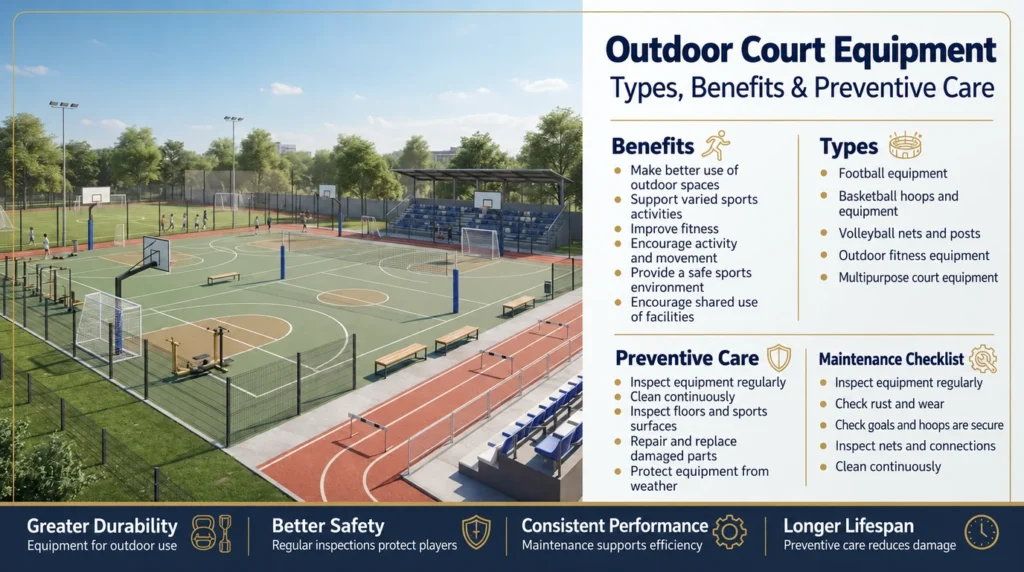
Overview of Outdoor Playground Equipment Outdoor playground and fitness equipment can be divided into two main categories, each with different uses and target users: Children’s Playground Equipment This includes: Outdoor Fitness Equipment for Adults This includes: Benefits and Key Muscles Targeted The benefits of outdoor playground equipment vary depending on the type of equipment and the age group using it: In general, outdoor playgrounds provide an environment that combines movement, recreation, and physical activity for both children and adults, with the flexibility to design the space according to the needs of its users. Quick Tips Before Purchasing Preventive Maintenance Outdoor equipment is exposed to sunlight, moisture, dust, and continuous use. Regular maintenance helps maintain safety and extend the equipment’s service life. Quick Takeaways Al Etihad Sports Fitness provides comprehensive solutions for setting up outdoor playgrounds, children’s play areas, and open-air fitness areas, with equipment designed for outdoor use and regular maintenance services to help maintain safety and performance. Contact our sales team to request a customized quotation.