September 12, 2026


Indoor game equipment is a suitable choice for entertainment centers, clubs, hotels, family centers, and multipurpose halls. It combines entertainment, physical activity, and social interaction, ranging from game tables and arcade machines to children’s play areas.
Choosing the right equipment depends on the target age group, available space, daily usage level, and required safety standards.
Indoor game equipment can be divided into several main categories, each with different applications:
This category includes recreational boxing machines, interactive arcade games, and gaming machines that use screens or sensors.
These games are suitable for entertainment centers, family recreation areas, and venues targeting young people and adults. They require an appropriate power supply and sufficient safe space around each machine.
These include indoor mazes, ball pits, climbing structures, and movement-based play equipment designed for children.
Such areas should be designed according to the users’ age groups, with suitable protective padding, adequate movement space, and regular equipment inspections.
Billiards and snooker tables are among the most popular indoor entertainment options for adults. They require sufficient clearance around the table so players can use their cues freely.
The table should also be placed on a level surface to ensure accurate gameplay and maintain stability.
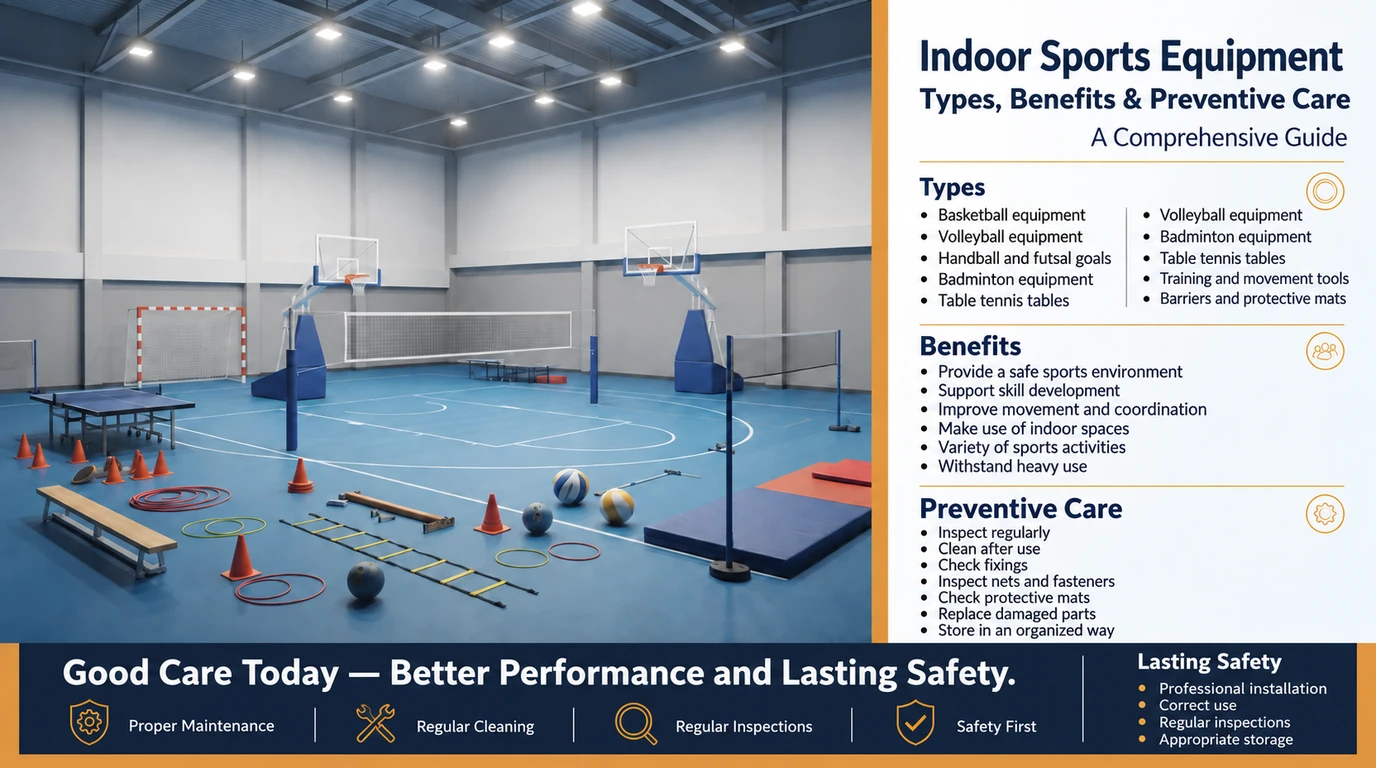
Table tennis combines entertainment with physical activity and requires enough space around the table for players to move and change direction.
A durable, high-quality playing surface should be selected, especially for facilities where the table is used daily.
Foosball provides an engaging group experience for entertainment centers and multipurpose halls. It also allows several players to participate at the same time.
Air hockey tables rely on a smooth playing surface and an air system that helps the puck glide across the table. They therefore require a suitable power supply and regular maintenance of the operating system and playing surface.
Indoor game equipment is not necessarily designed to build strength or fitness in the same way as specialized training equipment, but it offers a range of physical, social, and recreational benefits.
Games such as table tennis, foosball, and air hockey require players to track the movement of a ball or object and respond quickly. This can help develop reaction speed and hand-eye coordination.
Although some games are primarily recreational, they still involve movement, standing, and changes in body position, particularly games that require direct interaction between players.
Mazes, climbing structures, and movement-based play areas give children opportunities to develop skills such as balance, coordination, and body control, provided the equipment is age-appropriate and designed for safe use.
Many indoor games support group play and friendly competition, making them suitable for family centers, clubs, and entertainment venues.
Combining game tables, arcade machines, and children’s play areas can attract different age groups and provide visitors with a variety of activities within the same facility.
Before setting up an indoor gaming area, consider the following: