
How to Set Up a Professional Yoga and Pilates Studio
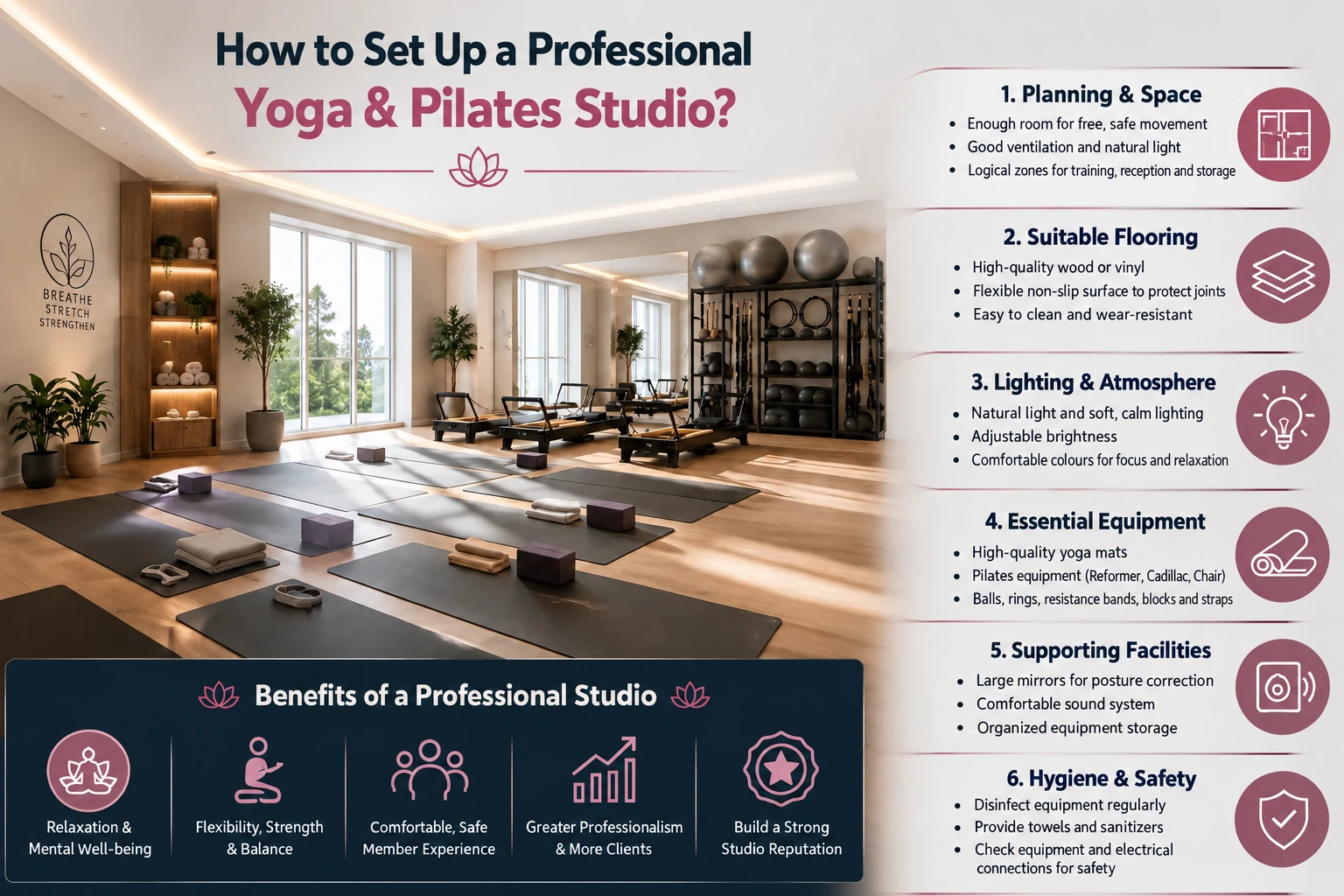
A yoga and Pilates studio differs from a traditional fitness gym. Comfort, calmness, cleanliness, and personal space for each participant are just as important to the overall experience as the quality of the equipment itself.
Therefore, setting up a professional studio starts with selecting the right equipment, followed by planning the space, storage, and cleaning procedures according to the nature of the classes and the number of participants.
1. Yoga Equipment: Simplicity Serves Function
Yoga classes do not require a large number of machines, but the quality of the essential tools can make a noticeable difference to the participant’s experience.
Choose mats made from comfortable, non-slip materials, taking into consideration the appropriate thickness for the type of classes and expected level of use.
Yoga Mats
For studios hosting multiple classes every day, mats should be easy to clean and resistant to wear caused by frequent use.
Yoga Blocks and Straps
Blocks and straps help participants achieve certain poses with greater control and are therefore essential tools for studios that accommodate different skill levels.
A range of additional accessories can also be provided depending on the type of classes, such as blankets, cushions, and pose-support tools.
2. Pilates Equipment: The Reformer Comes First
The Pilates Reformer is one of the most important investments in a Pilates studio. Equipment quality varies depending on the frame design, spring system, movement mechanism, and ease of maintenance.
If the studio will host consecutive classes throughout the day, priority should be given to equipment designed for frequent use, with a durable frame, smooth movement system, and components that can be easily maintained and replaced.
Pilates Accessories
Relatively low-cost accessories can be added to expand training options, such as:
- Pilates Rings (Magic Circles).
- Resistance Bands.
- Small Exercise Balls.
- Pilates Mats.
These accessories help diversify classes without requiring a significant increase in equipment or floor space.
3. Shared Accessories That Enhance the Studio Experience
There are several tools that can be used in both yoga and Pilates classes and can improve the participant experience while keeping the studio organized.
These include foam rollers, yoga wheels, resistance tools, as well as storage units for mats and accessories.
Storage should ideally be located close to the training area without obstructing participant movement or reducing the available space for classes.
4. Planning Space for Group Classes
Floor-based yoga and Pilates classes require sufficient space for each participant to move and extend their arms and legs without interfering with others.
As a general planning guideline, you can start with approximately 1.5 × 2 meters per participant for floor-based classes, then adjust this based on the type of class, equipment size, and nature of the movements.
In Reformer areas, additional space should be provided around the machines to allow instructors to move freely, monitor participants, and access the equipment easily.
Before purchasing equipment, it is best to create a complete studio layout showing:
- Target number of participants.
- Reformer locations.
- Movement areas.
- Instructor area.
- Studio entrances and exits.
- Storage areas.
- Cleaning and preparation area.
5. Cleanliness and Ease of Disinfection
Because there is direct body contact with the equipment, cleanliness is one of the most important aspects of operating a yoga and Pilates studio.
Choose equipment and materials that are easy to clean and disinfect, particularly mats, Reformer handles, and surfaces that participants frequently touch.
It is also useful to establish a clear cleaning schedule between classes and provide cleaning products that are suitable for the equipment materials and will not reduce their lifespan.
6. Storage and Organization
Good storage helps maintain the studio’s appearance and makes class preparation faster.
Use dedicated storage units for mats, straps, blocks, balls, and resistance bands, arranging the equipment so that participants can easily access and return it.
In multi-purpose studios, the storage system should allow the training area to be cleared quickly when transitioning from one class to another.
Quick Takeaways
- Make Reformer quality a priority if Pilates is a core part of the studio’s offering.
- Choose comfortable, stable, and easy-to-clean yoga mats and accessories.
- Calculate the space required per participant before determining the number of mats or Reformers.
- Provide sufficient movement space around Pilates equipment for both instructors and participants.
- Consider storage and cleaning requirements during the planning stage rather than after the studio opens.
Frequently Asked Questions
How Many Reformers Are Suitable for Starting a Pilates Studio?
The appropriate number depends on the studio’s available space, target group-class size, and daily operating schedule. A small studio may start with a limited number of machines and gradually expand as demand increases.
It is best to determine the number after evaluating the site’s total area, class capacity, and movement paths.