September 12, 2026

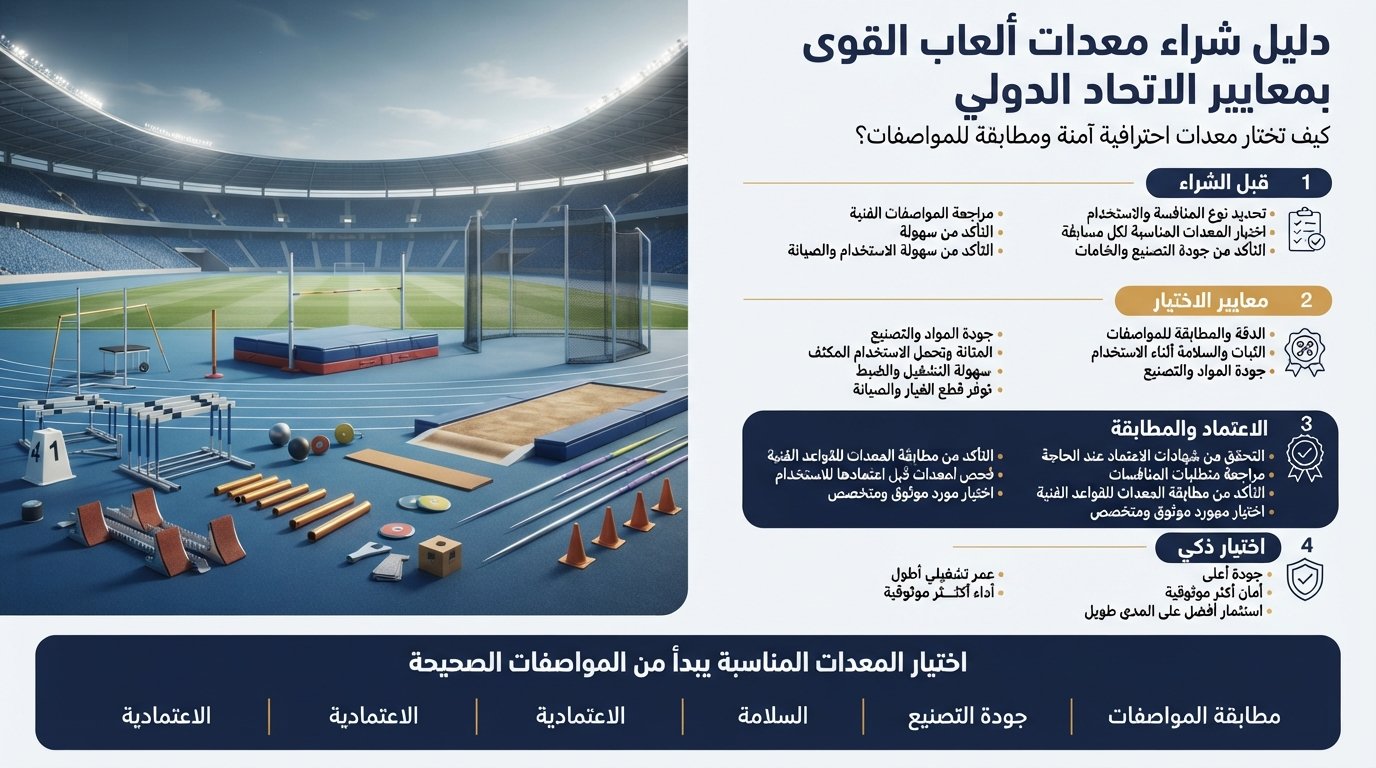
Athletics includes a wide range of track and field events, and each event has different requirements in terms of equipment, space, and safety. Therefore, careful planning before purchasing helps ensure that you choose the right equipment for the intended use, whether the goal is daily training or hosting official competitions.
Not every facility needs equipment designed for official competitions. For daily training, suitable training equipment can be selected based on the type of use and the athletes’ level.
For facilities that host official competitions, however, the requirements of World Athletics and the regulations applicable to each event must be taken into consideration, particularly for throwing and jumping events, where specific equipment weights, dimensions, and specifications apply.
Therefore, determine the intended use before purchasing, as this decision directly affects the type of equipment and the required budget.
Track events require a range of equipment to help organize races and maintain appropriate levels of safety and accuracy.
Choose hurdles with adjustable heights that are appropriate for the athletes’ age group and competition level. They should remain stable during use and be designed to fall in the intended manner when struck by an athlete.
High-quality starting blocks help athletes maintain a stable starting position. When preparing a facility for competitions, select models that comply with the requirements of the event and are suitable for the track surface.
Cones and other auxiliary equipment are used to mark lanes and organize movement within the facility. Products that are highly visible and easy to transport and store are recommended.
Field event areas require different types of equipment depending on the competition, with safety and specification accuracy being top priorities.
This includes shot puts, discus, javelins, and hammers. The appropriate weights and dimensions must be selected according to the athlete category and event.
For facilities hosting official competitions, ensure that the equipment complies with the required specifications. Its condition should also be inspected regularly to ensure there is no damage or alteration that could affect its weight or dimensions.
These events require uprights, support equipment, and suitable landing mats.
Landing mats are among the most important safety components. They should therefore be selected according to the intended use, with the padding, covers, and attachment points inspected regularly.
These events rely on properly equipped and well-maintained sand pits. The sand should be kept clean and free of foreign or sharp objects, and it should be leveled regularly to maintain a suitable landing area.
Accuracy plays a fundamental role in athletics results, particularly in official competitions.
Equipment may include:
When preparing a facility for competitions, choose systems that are appropriate for the competition level and comply with applicable regulations, while also paying attention to regular calibration and maintenance.
Schools, clubs, and sports federations may need to accommodate several events within the same facility. Therefore, it is preferable to plan the track, field event areas, measurement equipment, and timing systems as part of one integrated solution.
Advance planning helps to:
Purchasing equipment is not the end of the preparation process. Athletics equipment requires regular inspection, cleaning, and proper storage to maintain its performance.
Make sure to establish an inspection plan covering throwing equipment, landing mats, starting blocks, hurdles, and measurement and timing systems. Equipment should also be stored in dry, secure areas away from conditions that could cause damage.
This may be possible in some cases, but it depends on the condition of the track, the facility’s existing equipment, available space, and the requirements of the relevant events. Therefore, a technical site assessment is recommended before determining the