September 12, 2026

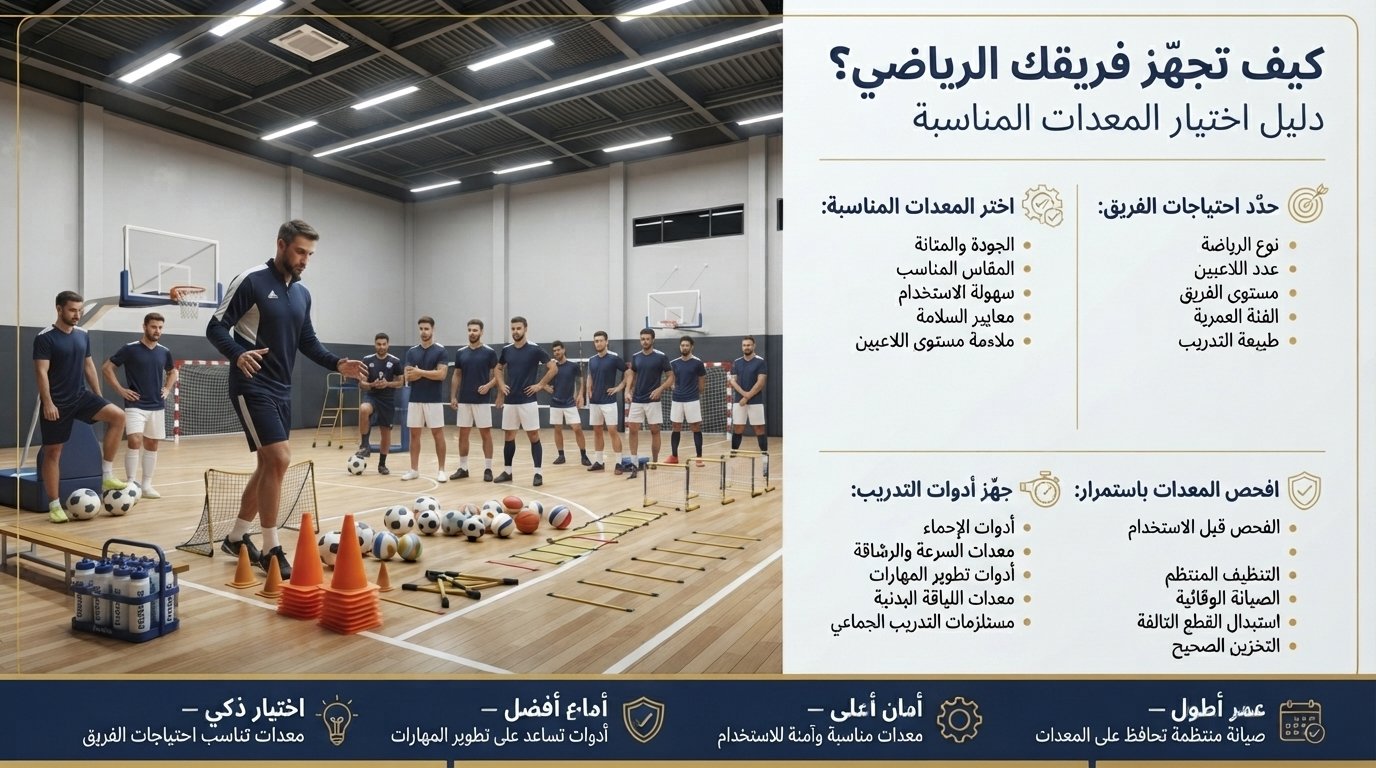
Equipping a sports team involves more than simply purchasing balls and basic equipment. It begins with understanding the requirements of each sport, distinguishing between daily training equipment and official competition equipment, and selecting equipment that matches the players’ skill level and the nature of the facility.
Whether you are equipping a sports club, school, or academy, proper planning helps you get the right equipment without spending your budget on unnecessary items.
Football teams need a range of essential equipment for training sessions and matches, including:
For daily training, training balls designed for intensive use can be selected. Official matches, however, require balls that meet the required specifications for size, weight, and bounce.
The stability of the goals should also be checked, and they should be properly secured before use.
Volleyball relies heavily on proper court setup. Key equipment includes:
The net height should be adjusted according to the age group, gender, and competition level, while ensuring that the posts are stable and the net is properly tensioned.
Court boundaries should also be clear and visible from different areas of the court.
The basketball system is one of the most important elements of the setup and typically includes the structure, backboard, rim, and net.
Particular attention should be paid to:
For daily training, basic equipment may be sufficient, with an emphasis on quality and durability rather than purchasing every piece of official competition equipment.
Handball teams require equipment suited to the fast pace of the game and frequent physical contact. Key equipment includes:
The goal and net should be inspected and their stability confirmed before training sessions and matches. The appropriate ball size should also be selected according to the players’ age group and competition level.
The equipment required varies depending on the type of hockey, but a basic setup may include:
Safety should be a top priority. Appropriate protective equipment should be provided according to the players’ age group and skill level. Sticks and protective equipment should also be inspected regularly, and any damaged item that could affect player safety should be replaced.
One of the most important decisions to make before purchasing is determining the intended level of use.
The focus should be on:
Official competition equipment requires careful attention to the specifications and certifications required by the relevant tournament or sports federation, in addition to manufacturing quality and durability.
Therefore, the same purchasing criteria should not necessarily be applied to all equipment. Some training equipment may be sufficient for an academy, while a facility that hosts official matches may require equipment that meets more specific standards.
It is not necessary to purchase everything during the first phase.
The budget can be divided into three stages:
This approach helps clubs and schools establish the essential setup first and then gradually develop the facility according to the budget and team requirements.
In addition to sports equipment, team uniforms are an important part of a club or academy’s visual identity.
Uniforms can be customized based on:
It is preferable to determine the required number of kits in advance and keep additional pieces available in the most commonly used sizes.
The purchasing process does not end once the equipment has been delivered and installed.
A regular maintenance plan should include:
A maintenance log should also be kept, particularly in clubs and schools where equipment is used every day.
Yes. Custom team kits can be designed according to the club’s visual identity, including colors, logo, player names, and numbers, based on the required design and quantities.
Official match balls must meet specific requirements that vary according to the sport and relevant federation, such as size, weight, bounce, and materials. Training balls, on the other hand, place greater emphasis on durability, daily-use performance, and budget suitability.
Yes. A unified equipment plan can be prepared for clubs and schools that offer multiple sports, with the budget and equipment divided according to the requirements of each court or facility.
Start by identifying the sport, number of players, age group, number of weekly training sessions, and whether the facility is intended solely for training or will also host official competitions. A suitable equipment list and budget can then be developed based on actual usage requirements.
Al Etihad Sports Fitness provides comprehensive solutions for equipping clubs, schools, and academies with team sports equipment, from essential equipment and training supplies to competition-grade setups, along with supply, installation, maintenance, and technical support services.
Customized solutions are also available for designing and supplying sports team kits that match the club’s identity and team requirements.
Contact our sales team to request a customized quotation.