September 12, 2026

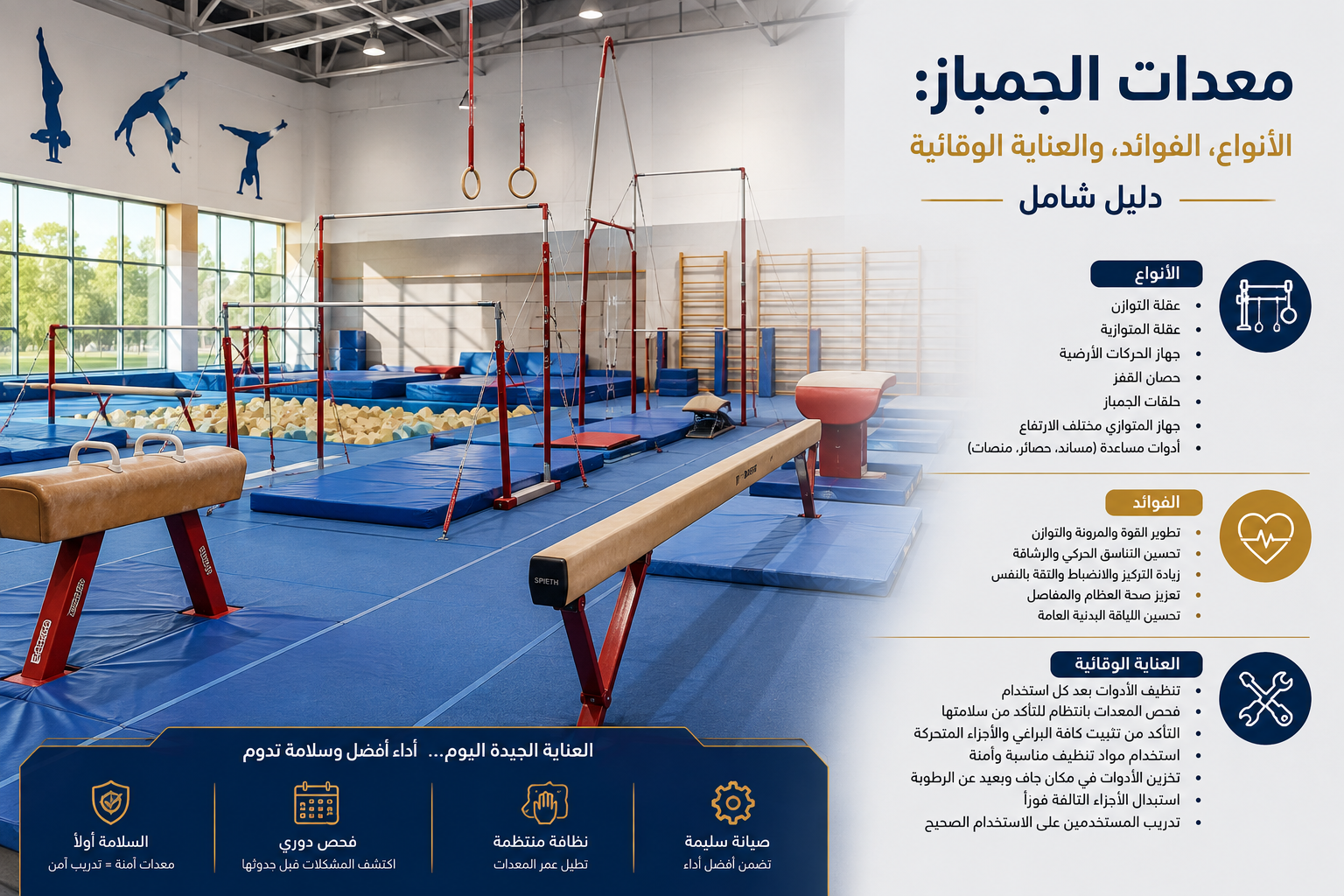
Gymnastics equipment is more than just a set of training tools. It plays an essential role in developing strength, balance, flexibility, and movement control. Choosing the right equipment depends on the athletes’ level and the intended use, while regular maintenance is essential to maintain safety and extend the equipment’s service life.
Basic gymnastics equipment can be divided into several types, each with different uses and benefits:
Choosing the right apparatus depends not only on the type of exercise but also on the athletes’ age, training level, and the available gym space.
Gymnastics equipment supports full-body training by combining strength, balance, coordination, and movement control.
The balance beam helps develop balance and neuromuscular coordination while strengthening the core and stabilizing muscles in the legs and ankles. It also improves the athlete’s ability to control body position during movement.
Parallel bars are effective for training the shoulders, chest, and arms, particularly the triceps. Exercises performed on the bars also require continuous core engagement to maintain body stability.
Vaulting equipment helps develop explosive power and control during jumping and rotational movements. The quadriceps, lower-leg muscles, and core muscles play an important role in performing these movements.
Gymnastics rings require a high level of stability and control, helping strengthen the shoulders, arms, wrists, and core muscles. They also provide athletes with opportunities to develop balance and stability during various movements.
Before purchasing any equipment, make sure to:
Regular maintenance helps identify problems at an early stage and reduce the likelihood of equipment failure. It also contributes to maintaining appropriate safety and performance levels.
Inspect mounting bolts and hinges regularly, particularly on parallel bars and vaulting equipment that are subject to frequent use. A monthly inspection can be incorporated into the maintenance schedule, with additional inspections whenever unusual movement or noise is detected.
For equipment containing tension or securing systems, check all components for signs of wear or damage. Any damaged component should be handled according to the manufacturer’s instructions and replaced before the equipment is returned to service.
Keep the surfaces of the balance beam, parallel bars, and rings clean. Remove dust, moisture, and residues that could affect grip or safe use. Use cleaning products recommended by the manufacturer to avoid damaging the surfaces.
Inspect landing mats regularly for tears, deformation, or noticeable loss of density in the internal padding. Replace mats that no longer provide the required level of protection.
Store equipment in a dry, well-ventilated environment away from moisture and direct water sources. This helps reduce the risk of corrosion on metal components and extends equipment life.
Replacement decisions should not be based solely on the equipment’s age. If cracks or structural damage appear, mounting points become worn, or landing mats lose their ability to absorb impact, the affected equipment should be taken out of service and inspected by a qualified professional.
It is also recommended to follow the manufacturer’s inspection and replacement guidelines and never use equipment showing signs of damage that could compromise its safety.
Choosing the right gymnastics equipment starts with identifying the needs of the facility and the athletes’ skill levels, while preventive maintenance ensures that the equipment continues to operate safely and efficiently.
Choose high-quality apparatus, provide appropriate landing mats and safety flooring, conduct regular inspections, and work with a supplier that can provide technical support and spare parts when required.
At Al-Etihad Al-Riyadi, we provide gymnastics equipment suitable for schools, clubs, and sports facilities, along with installation, maintenance, and technical support services to help maintain athlete safety and extend equipment life.
Contact our sales team to request a customized quotation.