September 12, 2026

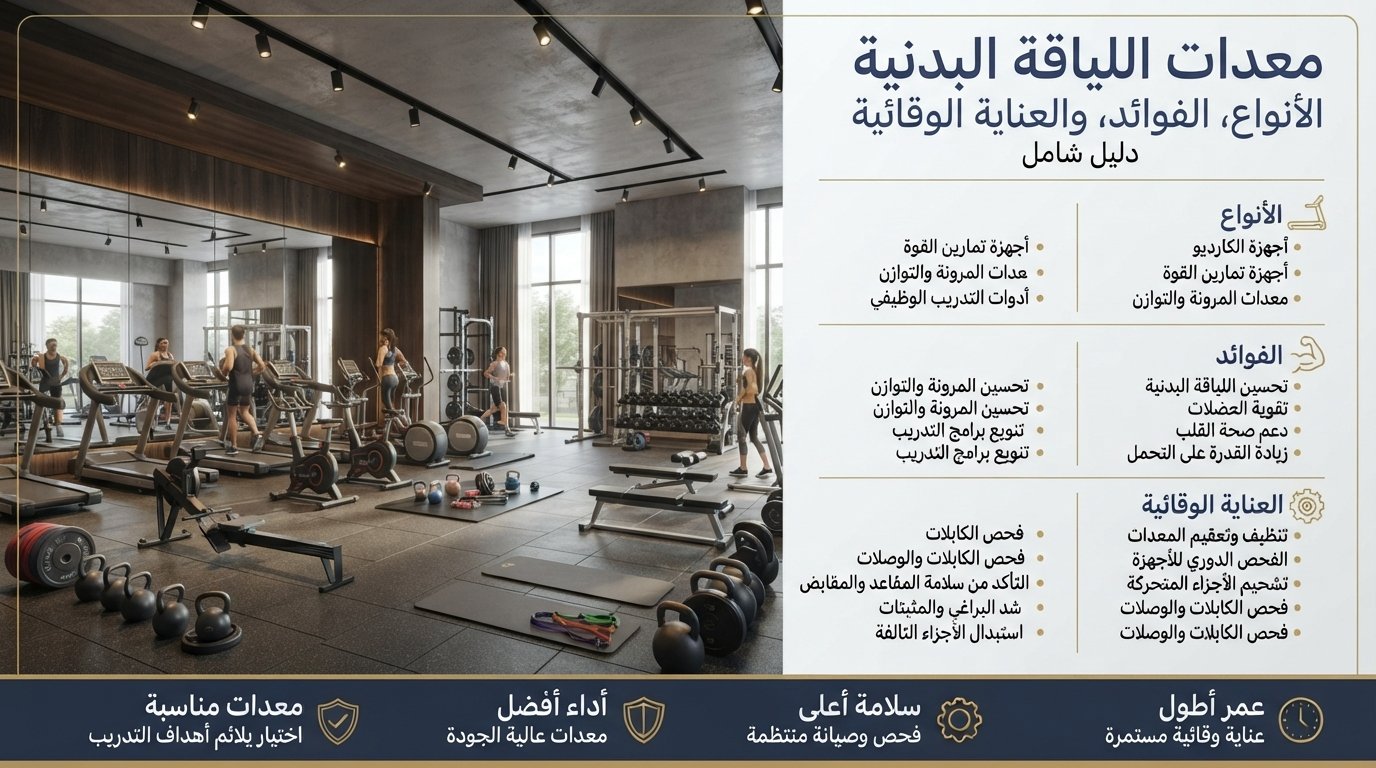
Fitness equipment is one of the most important elements in setting up a gym, whether the facility is designed for general training, strength development, or improving cardiovascular fitness and endurance. Choosing the right equipment depends on the nature of the gym, the number of users, and their training levels. Preventive maintenance is equally important to maintain performance and safety while reducing equipment downtime and unexpected breakdowns.
Fitness equipment can be divided into five main categories, each serving different purposes and offering different benefits:
Fitness equipment allows users to diversify their workouts and target different muscle groups, helping create a more comprehensive training program.
Treadmills, exercise bikes, and elliptical machines help improve cardiovascular fitness, aerobic capacity, and endurance. They also engage the lower-body muscles, such as the quadriceps and calves, to varying degrees depending on the equipment and workout intensity.
Strength machines allow users to perform guided movements targeting specific muscle groups, including the chest, back, shoulders, arms, and legs. Guided movement provides greater control, making some machines particularly suitable for beginners or exercises that require focused muscle targeting.
Functional training is based on compound movements that engage multiple muscle groups simultaneously. This type of training helps develop core strength, balance, coordination, and movement control, while also improving the ability to perform everyday and athletic movements.
Free weights provide considerable flexibility for strength training and can be used to work different areas of the body. Many free-weight exercises also require stabilizing muscles to maintain proper body position and control throughout the movement.
Tools such as foam rollers and resistance bands can help diversify workouts and support mobility, warm-ups, and recovery as part of a training program. Their effects vary depending on the type of equipment and how it is used.
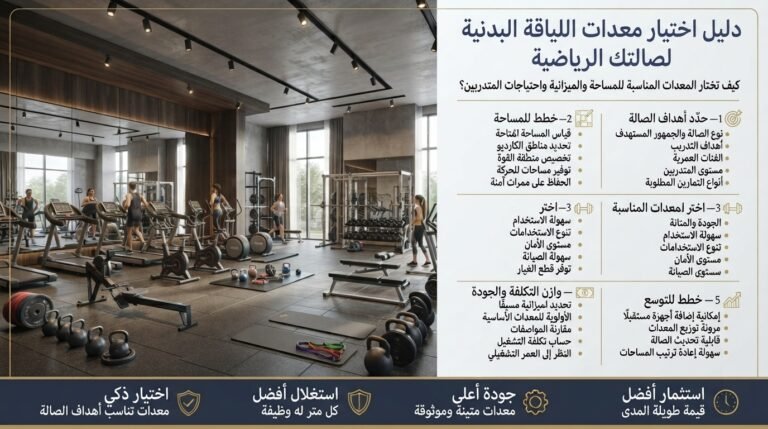
Before equipping your gym, consider the following:
Preventive maintenance helps reduce unexpected breakdowns and maintain equipment efficiency, while also contributing to a longer operational lifespan.
Inspect the condition of the running belt and walking surface regularly, and follow the manufacturer’s instructions regarding lubrication and maintenance intervals. Lubrication requirements vary depending on the equipment model and usage level, so a single maintenance schedule should not be applied to all machines.
Inspect cables and connections regularly for signs of wear, cracking, or visible damage. Any damaged cable should be taken out of service and replaced according to the manufacturer’s instructions before the equipment is used again.
Electrical equipment equipped with fans or ventilation systems requires regular cleaning of filters and ventilation openings. Removing accumulated dust helps improve airflow and reduce the risk of overheating components.
Check bolts, mounting points, and connections regularly, particularly on functional training equipment and machines exposed to varying loads. Any tightening or adjustment should be performed according to the manufacturer’s instructions.
Clean handles, seats, and other surfaces frequently touched by users on a daily basis, using products that are compatible with the materials and upholstery. Regular cleaning helps maintain hygiene and reduce surface deterioration.
Do not wait for a major breakdown before inspecting equipment. Unusual noises, vibrations, abnormal movement, damaged cables or belts, and problems with locking or fastening systems are all signs that an inspection may be necessary.
If a damaged component is found that could affect user safety, the equipment should be taken out of service until it has been inspected and repaired or the damaged component has been replaced by a qualified professional.
Choosing the right fitness equipment starts with understanding the nature of the gym and its target audience, followed by allocating the budget across cardio equipment, strength training machines, functional training equipment, free weights, and accessories according to actual needs.
Preventive maintenance is just as important as equipment quality. Regular inspections, cleaning, and proper attention to spare parts can help reduce breakdowns, maintain equipment efficiency, and ensure continuous gym operations.
At Al-Etihad Al-Riyadi, we provide a range of fitness equipment suitable for gyms and various facilities, along with maintenance and technical support services to help maintain equipment performance and operational continuity.
Contact our sales team to request a customized quotation.