
sports-union.com

Home / Blog / غير مصنف
غير مصنف

How to Choose Safe Outdoor Playground Equipment for Your Facility

September 12, 2026 5 min read

How to Choose Safe Outdoor Playground Equipment for Your Facility

Outdoor playgrounds serve two completely different groups: children’s play areas and outdoor fitness training areas for adults. Each group has different requirements in terms of design, safety, materials, and maintenance.

Choosing the right equipment from the beginning helps reduce the risk of injuries, extend the lifespan of the components, and maintain a high-quality user experience.

1. Children’s Playground Equipment: Start with the Age Group

Slides, swings, and climbing structures vary in design, height, and difficulty depending on the child’s age.

Therefore, equipment should be selected according to the target age group, taking into consideration:

  • Equipment height.
  • Movement and landing areas.
  • Activity difficulty level.
  • The child’s ability to climb, descend, and control their movements.
  • Clear and safe transition areas between different play structures.

It is preferable to separate play areas designed for different age groups when there is a significant difference in children’s size and motor abilities.

2. Safety Surfacing Is Not Optional

Safety surfacing is one of the most important elements when setting up any children’s playground, especially underneath and around:

  • Slides.
  • Swings.
  • Climbing structures.
  • Elevated play platforms.

The type and thickness of the safety surfacing should be selected based on the potential fall height and the nature of the equipment, rather than simply on appearance or price.

The surface should also be inspected regularly to ensure there are no tears, depressions, or areas that have lost their shock-absorbing capability.

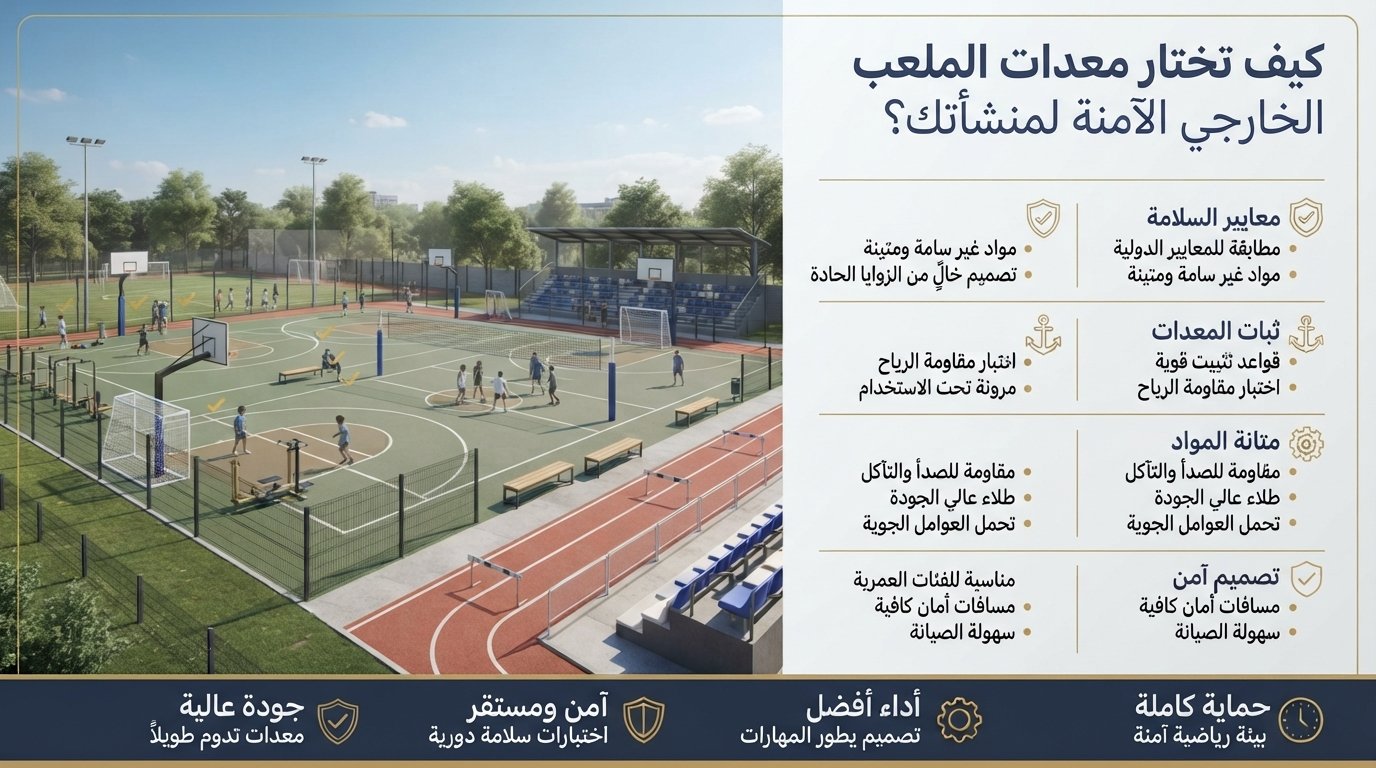
3. Choose Materials That Can Withstand Weather Conditions

Outdoor equipment is continuously exposed to sunlight, moisture, dust, and temperature fluctuations. Therefore, materials suitable for outdoor use should be selected.

Look for equipment that offers:

  • Resistance to rust and corrosion.
  • UV resistance.
  • Durable exterior coatings.
  • Strong fastening components.
  • Materials that can withstand heat and moisture.

Choosing the right materials from the beginning reduces the need for frequent repairs and replacements.

4. Sand Play Areas Require Regular Care

If the playground design includes a sand play area, cleanliness and maintenance should be addressed regularly.

Essential maintenance includes:

  • Replenishing the sand when necessary.
  • Removing sharp objects or foreign materials.
  • Inspecting the area after storms or severe weather conditions.
  • Maintaining clearly defined edges separating the sand area from the rest of the playground.
  • Preventing water from accumulating within the area.

5. Outdoor Fitness Equipment for Adults

If the facility includes an outdoor functional training area, it should be treated as a fitness training space rather than simply as a play area.

Functional Training Stations and Obstacle Courses

These structures should be able to withstand frequent use and different loads while providing sufficient movement space between training stations.

Planning should take into account:

  • Safe distances between equipment.
  • Movement paths between stations.
  • The type of flooring.
  • Equipment anchoring points.
  • The structure’s ability to withstand repeated use.

6. Training Ropes and Training Frames

Training ropes and training frames are practical tools for outdoor areas, but they require strong and secure anchoring.

Before purchasing, make sure to check:

  • The quality of the anchoring points.
  • The structure’s ability to withstand repeated tensile forces.
  • The ropes’ resistance to moisture and weather conditions.
  • The ease of inspecting and replacing worn components.

Any rope showing signs of wear or cracking should be removed from service and replaced before further use.

7. Planning Is More Important Than Simply Buying Equipment

One common mistake is purchasing the equipment first and then trying to find a suitable location for installation.

Instead, the project should begin by defining:

  • Available site area.
  • Target age group.
  • Expected number of users.
  • Required activities.
  • Movement and fall zones.
  • Entry and exit points.
  • Appropriate safety surfacing.
  • Installation and maintenance requirements.

This approach results in a safer playground that is easier to manage and operate efficiently.

8. Regular Maintenance Is Part of Safety

Outdoor equipment is exposed to conditions that can accelerate wear and deterioration compared with indoor equipment. Therefore, you should not wait for an obvious fault to appear before conducting an inspection.

A maintenance program should include:

  • Inspecting bolts, fasteners, and connections.
  • Checking hinges and moving components.
  • Looking for rust and corrosion.
  • Inspecting ropes and anchoring points.
  • Checking safety surfacing.
  • Ensuring there are no sharp edges or loose components.
  • Conducting an additional inspection after severe weather conditions.

Quick Takeaways

  • Choose playground equipment based on the target age group, not appearance alone.
  • Do not install children’s playground equipment without providing appropriate safety surfacing.
  • Choose rust-resistant and UV-resistant materials for outdoor use.
  • Separate children’s play areas from functional training areas when both are included in the same facility.
  • Plan movement and fall zones before determining the number of equipment units.
  • Establish a regular inspection and maintenance schedule rather than waiting for problems to appear.

Frequently Asked Questions

How Often Should Outdoor Playground Equipment Be Inspected?

A regular inspection program should be established based on usage levels and weather conditions, with additional inspections after severe conditions such as heavy rain or strong winds.

Can a Children’s Play Area and a Functional Training Area Be Combined?

Yes, both can be included within the same facility. However, there should be clear separation between the two areas through proper