
المدونة و مركز المعرفة
مقالات وأدلة متخصصة تساعدك في اختيار المعدات الرياضية وتجهيز المنشآت بأفضل الحلول ومعايير الجودة والأداء والسلامة.
المعرفة الرياضية في مكان واحد
تصفح أدلة الشراء والمقالات المتخصصة والنصائح التي تساعدك على اتخاذ القرار المناسب لمشروعك الرياضي.
 غير مصنف
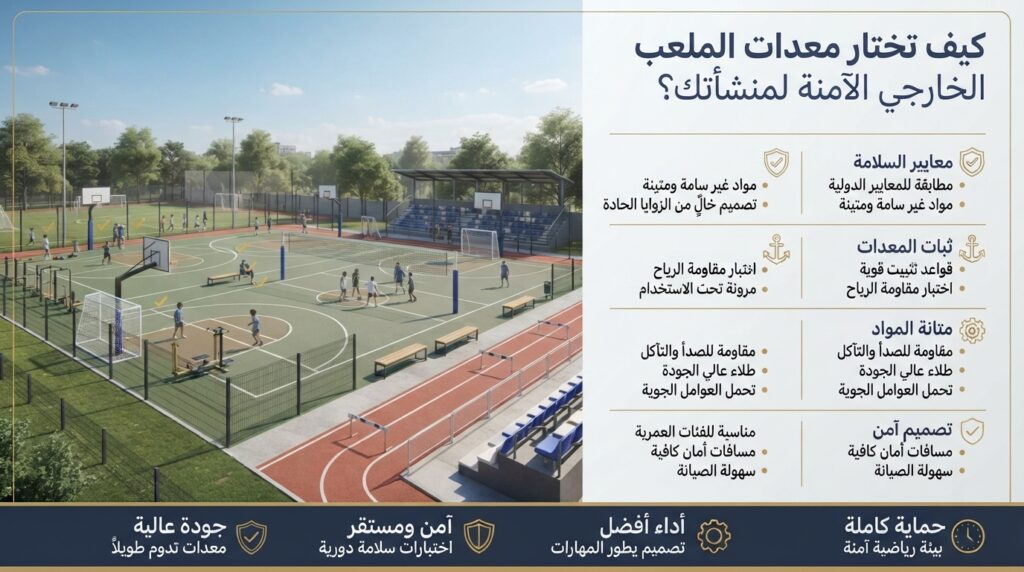
How to Choose Safe Outdoor Playground Equipment for Your Facility
How to Choose Safe Outdoor Playground Equipment for Your Facility Outdoor playgrounds serve two completely different groups: children’s play areas and outdoor fitness training areas for adults. Each group has different requirements in terms of design, safety, materials, and maintenance. Choosing the right equipment from the beginning helps reduce the risk of injuries, extend the lifespan of the components, and maintain a high-quality user experience. 1. Children’s Playground Equipment: Start with the Age Group Slides, swings, and climbing structures vary in design, height, and difficulty depending on the child’s age. Therefore, equipment should be selected according to the target age group, taking into consideration: It is preferable to separate play areas designed for different age groups when there is a significant difference in children’s size and motor abilities. 2. Safety Surfacing Is Not Optional Safety surfacing is one of the most important elements when setting up any children’s playground, especially underneath and around: The type and thickness of the safety surfacing should be selected based on the potential fall height and the nature of the equipment, rather than simply on appearance or price. The surface should also be inspected regularly to ensure there are no tears, depressions, or areas that have lost their shock-absorbing capability. 3. Choose Materials That Can Withstand Weather Conditions Outdoor equipment is continuously exposed to sunlight, moisture, dust, and temperature fluctuations. Therefore, materials suitable for outdoor use should be selected. Look for equipment that offers: Choosing the right materials from the beginning reduces the need for frequent repairs and replacements. 4. Sand Play Areas Require Regular Care If the playground design includes a sand play area, cleanliness and maintenance should be addressed regularly. Essential maintenance includes: 5. Outdoor Fitness Equipment for Adults If the facility includes an outdoor functional training area, it should be treated as a fitness training space rather than simply as a play area. Functional Training Stations and Obstacle Courses These structures should be able to withstand frequent use and different loads while providing sufficient movement space between training stations. Planning should take into account: 6. Training Ropes and Training Frames Training ropes and training frames are practical tools for outdoor areas, but they require strong and secure anchoring. Before purchasing, make sure to check: Any rope showing signs of wear or cracking should be removed from service and replaced before further use. 7. Planning Is More Important Than Simply Buying Equipment One common mistake is purchasing the equipment first and then trying to find a suitable location for installation. Instead, the project should begin by defining: This approach results in a safer playground that is easier to manage and operate efficiently. 8. Regular Maintenance Is Part of Safety Outdoor equipment is exposed to conditions that can accelerate wear and deterioration compared with indoor equipment. Therefore, you should not wait for an obvious fault to appear before conducting an inspection. A maintenance program should include: Quick Takeaways Frequently Asked Questions How Often Should Outdoor Playground Equipment Be Inspected? A regular inspection program should be established based on usage levels and weather conditions, with additional inspections after severe conditions such as heavy rain or strong winds. Can a Children’s Play Area and a Functional Training Area Be Combined? Yes, both can be included within the same facility. However, there should be clear separation between the two areas through proper
قراءة المقال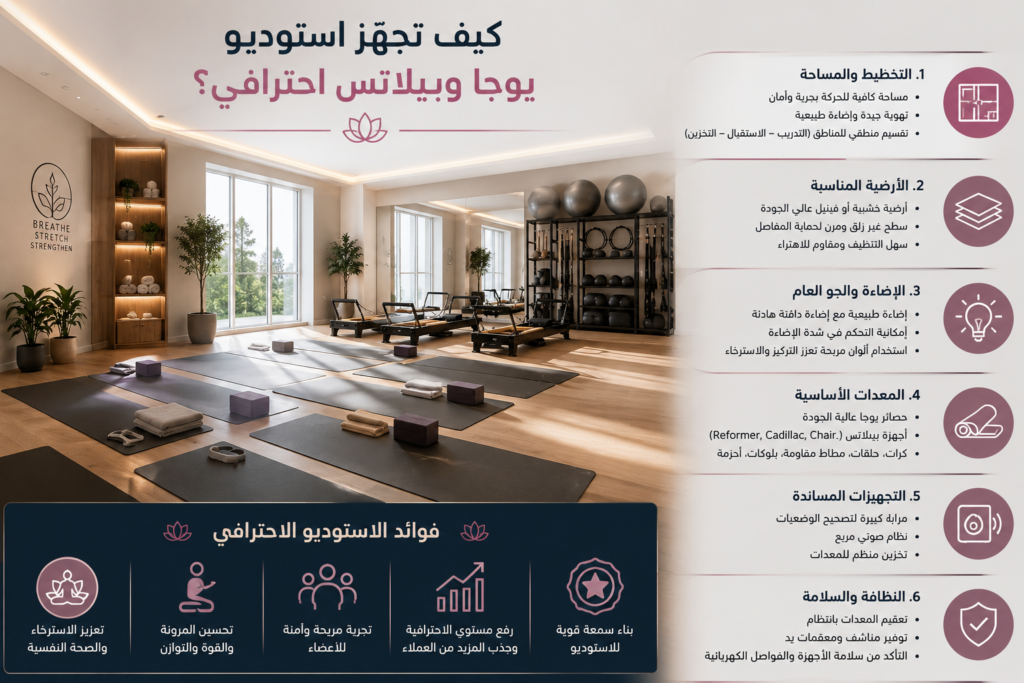 غير مصنف
How to Set Up a Professional Yoga and Pilates Studio ?
How to Set Up a Professional Yoga and Pilates Studio A yoga and Pilates studio differs from a traditional fitness gym. Comfort, calmness, cleanliness, and personal space for each participant are just as important to the overall experience as the quality of the equipment itself. Therefore, setting up a professional studio starts with selecting the right equipment, followed by planning the space, storage, and cleaning procedures according to the nature of the classes and the number of participants. 1. Yoga Equipment: Simplicity Serves Function Yoga classes do not require a large number of machines, but the quality of the essential tools can make a noticeable difference to the participant’s experience. Choose mats made from comfortable, non-slip materials, taking into consideration the appropriate thickness for the type of classes and expected level of use. Yoga Mats For studios hosting multiple classes every day, mats should be easy to clean and resistant to wear caused by frequent use. Yoga Blocks and Straps Blocks and straps help participants achieve certain poses with greater control and are therefore essential tools for studios that accommodate different skill levels. A range of additional accessories can also be provided depending on the type of classes, such as blankets, cushions, and pose-support tools. 2. Pilates Equipment: The Reformer Comes First The Pilates Reformer is one of the most important investments in a Pilates studio. Equipment quality varies depending on the frame design, spring system, movement mechanism, and ease of maintenance. If the studio will host consecutive classes throughout the day, priority should be given to equipment designed for frequent use, with a durable frame, smooth movement system, and components that can be easily maintained and replaced. Pilates Accessories Relatively low-cost accessories can be added to expand training options, such as: These accessories help diversify classes without requiring a significant increase in equipment or floor space. 3. Shared Accessories That Enhance the Studio Experience There are several tools that can be used in both yoga and Pilates classes and can improve the participant experience while keeping the studio organized. These include foam rollers, yoga wheels, resistance tools, as well as storage units for mats and accessories. Storage should ideally be located close to the training area without obstructing participant movement or reducing the available space for classes. 4. Planning Space for Group Classes Floor-based yoga and Pilates classes require sufficient space for each participant to move and extend their arms and legs without interfering with others. As a general planning guideline, you can start with approximately 1.5 × 2 meters per participant for floor-based classes, then adjust this based on the type of class, equipment size, and nature of the movements. In Reformer areas, additional space should be provided around the machines to allow instructors to move freely, monitor participants, and access the equipment easily. Before purchasing equipment, it is best to create a complete studio layout showing: 5. Cleanliness and Ease of Disinfection Because there is direct body contact with the equipment, cleanliness is one of the most important aspects of operating a yoga and Pilates studio. Choose equipment and materials that are easy to clean and disinfect, particularly mats, Reformer handles, and surfaces that participants frequently touch. It is also useful to establish a clear cleaning schedule between classes and provide cleaning products that are suitable for the equipment materials and will not reduce their lifespan. 6. Storage and Organization Good storage helps maintain the studio’s appearance and makes class preparation faster. Use dedicated storage units for mats, straps, blocks, balls, and resistance bands, arranging the equipment so that participants can easily access and return it. In multi-purpose studios, the storage system should allow the training area to be cleared quickly when transitioning from one class to another. Quick Takeaways Frequently Asked Questions How Many Reformers Are Suitable for Starting a Pilates Studio? The appropriate number depends on the studio’s available space, target group-class size, and daily operating schedule. A small studio may start with a limited number of machines and gradually expand as demand increases. It is best to determine the number after evaluating the site’s total area, class capacity, and movement paths.
قراءة المقالهل تخطط لتجهيز مشروع رياضي؟
نوفر حلولاً متكاملة لتجهيز المنشآت والمدارس والأندية والصالات الرياضية بالمعدات المناسبة لمتطلبات مشروعك.