September 12, 2026

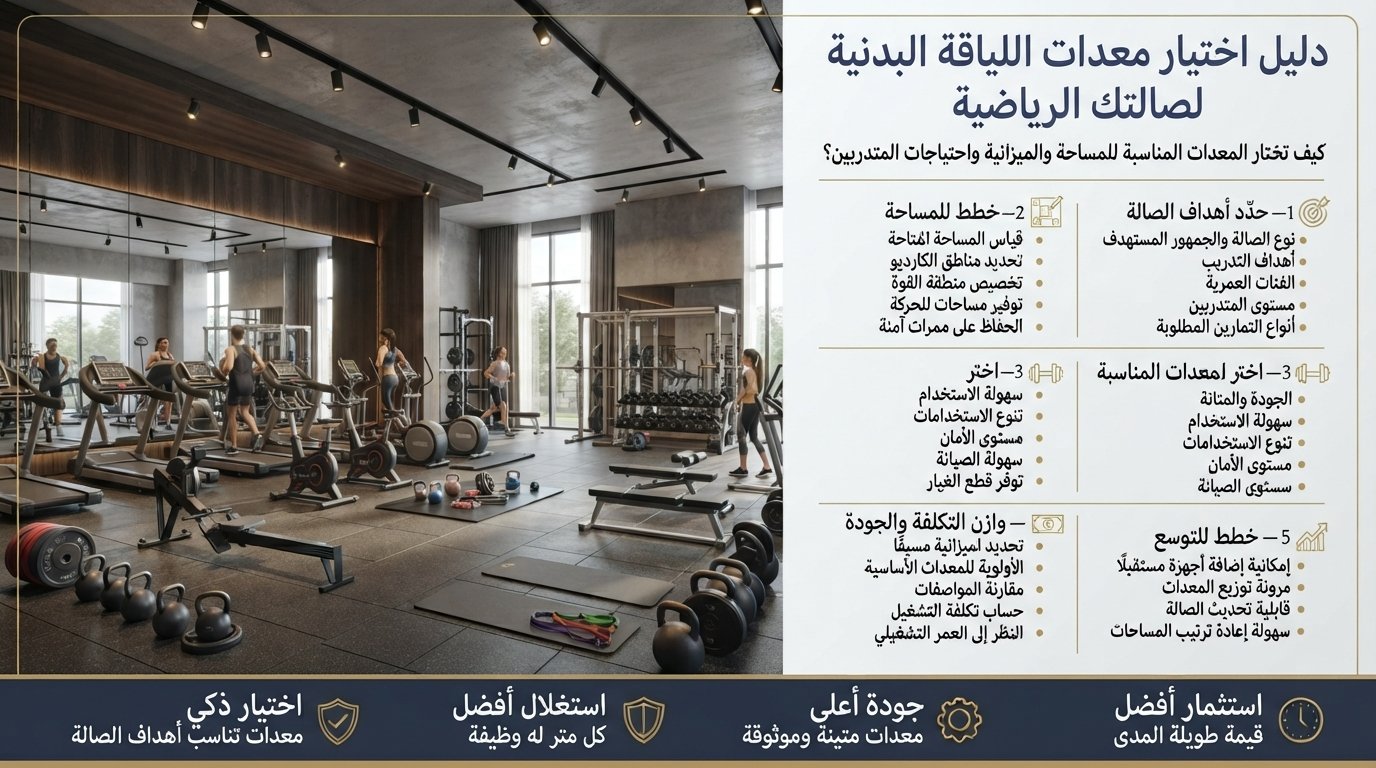
Setting up a successful fitness facility does not begin with buying equipment. It starts with understanding the type of facility, who will use it, the expected number of users, and the level of daily usage. Whether you are equipping a fitness club, hotel gym, or sports facility within a government organization, proper planning helps you make the best use of your available space and budget.
Before selecting any equipment, determine the expected level of usage.
Commercial-grade equipment is designed to operate for extended periods and accommodate a large number of users each day. It typically features more durable components and operating systems designed for intensive use.
Light-commercial equipment, on the other hand, may be suitable for facilities with limited usage, such as some hotel gyms or residential complexes. However, it may not be the best choice for a busy gym operating for long hours every day.
Therefore, do not base your decision on price alone. Compare the equipment’s classification with the expected usage level before purchasing.
A complete fitness facility can generally be divided into five main equipment categories:
There is no single equipment ratio that suits every gym. A facility focused on beginners may need a greater emphasis on cardio and guided strength machines, while professional gyms may require more space for free weights and functional training.
One of the most common mistakes is purchasing equipment before creating a clear floor plan for the gym.
Before signing a purchase agreement, determine the locations of equipment, circulation paths, safety zones, and storage areas. The clearance requirements specified by the manufacturer for each machine should be followed, while also considering the movement of users and staff throughout the facility.
Free-weight and functional-training areas also require suitable flooring capable of withstanding intensive use and impact.
You can also refer to the Guide to Choosing the Right Sports Flooring for Your Facility.
Ventilation is just as important as equipment layout. Gyms containing a large number of cardio machines require an appropriate ventilation and air-conditioning system based on the nature of use and the number of people present during peak hours.
When positioning equipment, also consider accessibility to air outlets and maintenance equipment.
When comparing equipment, do not focus solely on appearance or the number of features. Examine the quality of the frame, components, and parts that are exposed to frequent use.
For cardio equipment, pay attention to the motor, drive system, and usage capacity. For strength equipment, inspect the frame, movement points, cables, handles, and padding.
For free weights and functional-training equipment, priority should be given to material quality, stability, and the equipment’s ability to withstand repeated use.
The warranty is an essential part of the purchasing decision, not merely an additional benefit.
Ask the supplier about:
It is preferable for all warranty terms and conditions to be clearly documented before completing the purchase agreement.
Even the best equipment requires regular maintenance when subjected to intensive use.